 There is a height at which Bangkok begins to make sense. It is not the height of observation decks or rooftop bars, nor the polished perspective of hotel lobbies. It is roughly one meter above the ground: the height of a bowl held in both hands, of a trolley wheel, of a face bent slightly forward while working. Walking height. Human height.
From here, the city stops being spectacular and starts being legible.
At one meter close, Bangkok is not a skyline but a sequence of gestures. Hands passing change. Hands wiping a plate with a cloth already too wet. Hands steadying a wok while the flame licks its edge. The city is built by these movements, repeated thousands of times a day, unnoticed and indispensable. Photography at this height is less about framing and more about proximity, about accepting that the subject is already there, inches away, unfolding in real time.
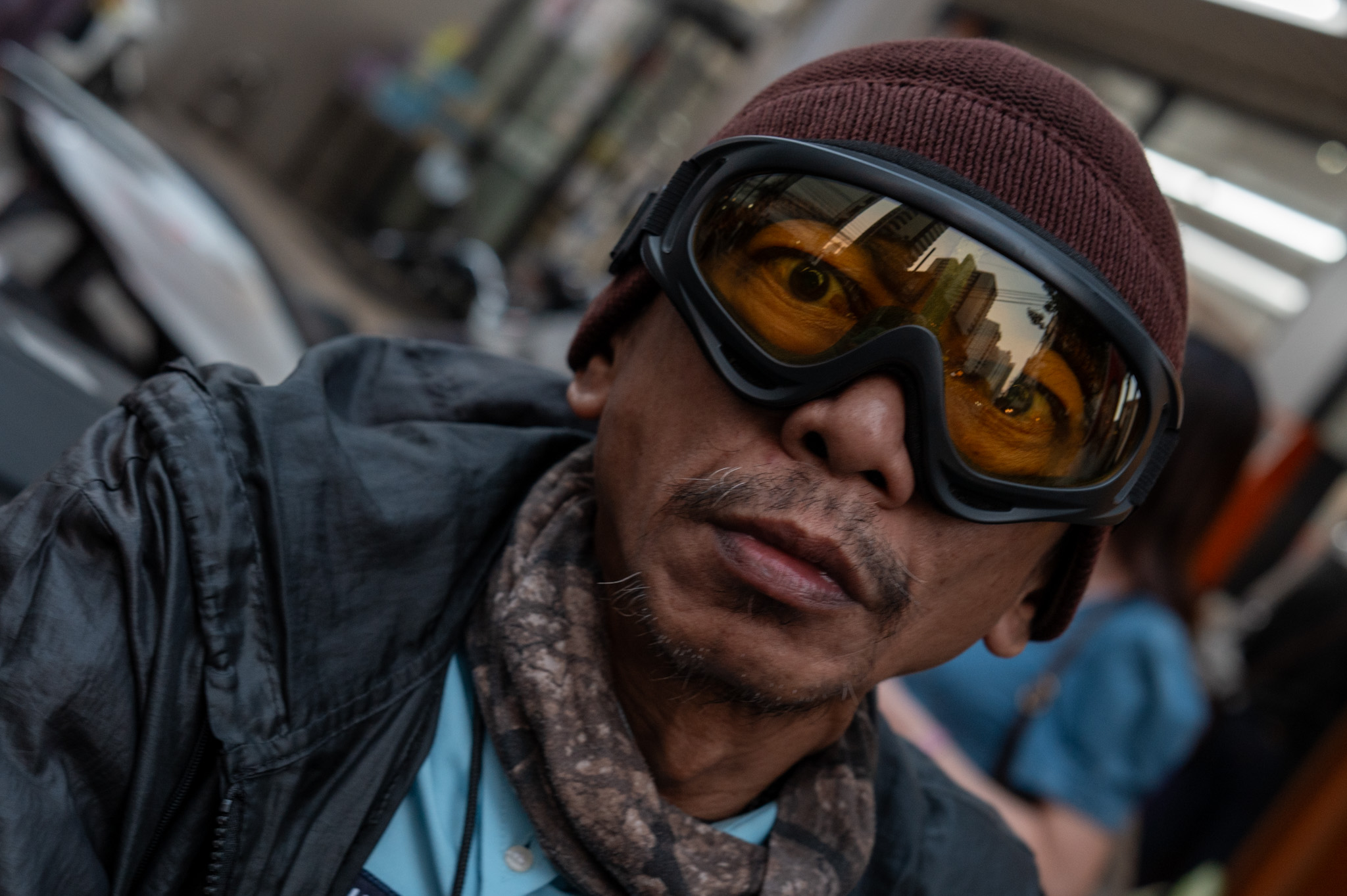
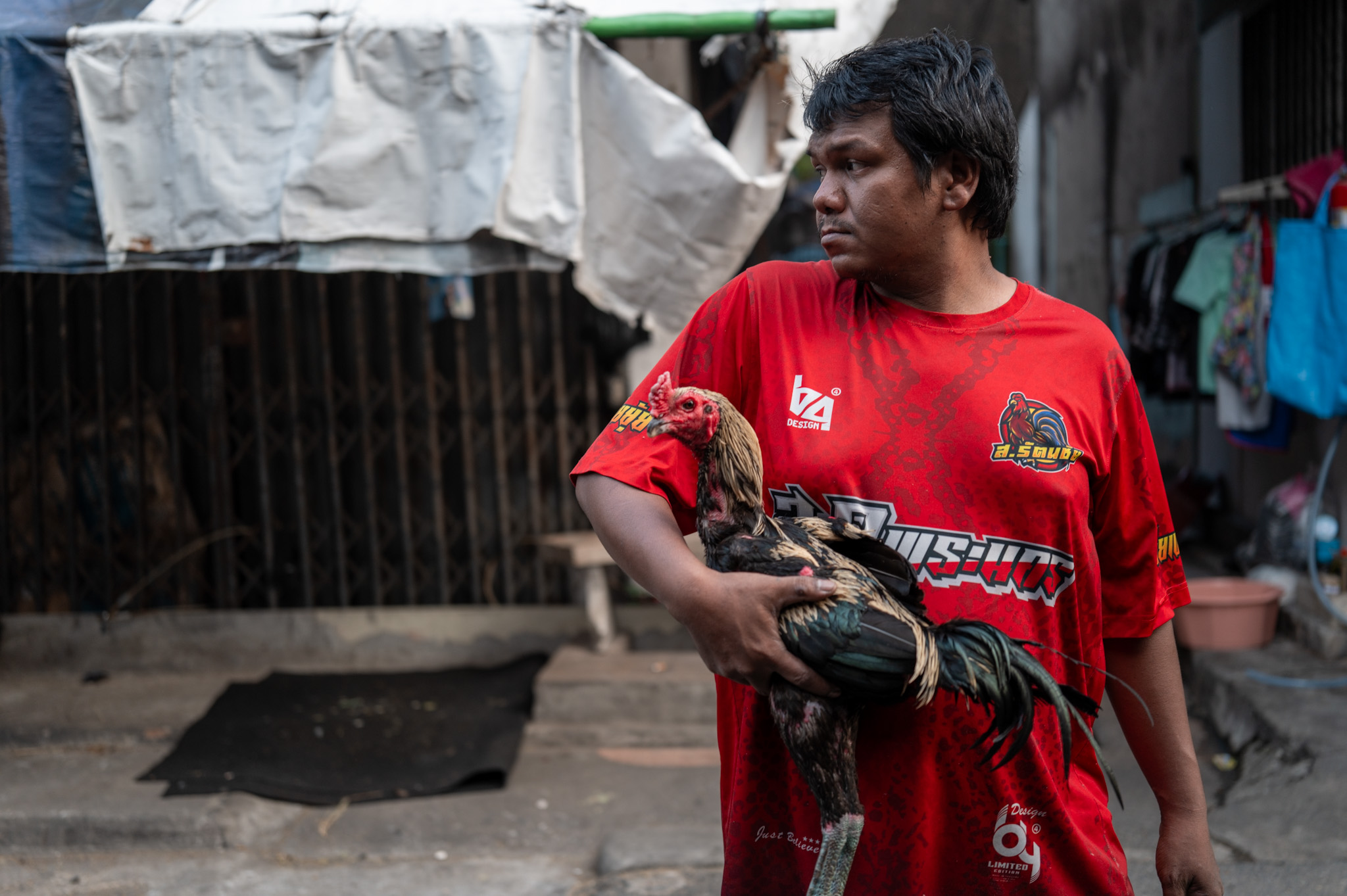
Bowls appear everywhere at this level. Ceramic, plastic, metal. They move from steam to table to sink in a choreography that needs no direction. A bowl is never just a container: it is a unit of time, a pause in the flow of the street. People do not sit to eat; they stop. Eating becomes an intermission, not a destination. From one meter close, you understand that Bangkok does not invite you to linger, it allows you to exist.
Then there are the wheels. Small, abused, often mismatched. The wheels of food carts, hand trucks, market trolleys. They are the city’s silent infrastructure. At street level, logistics becomes physical. Goods do not “arrive”; they are pushed, pulled, lifted, balanced. A wheel stuck in a crack can delay an entire micro-economy. From this height, you see that the city runs not on software but on friction, and on the skill of those who know how to negotiate it.
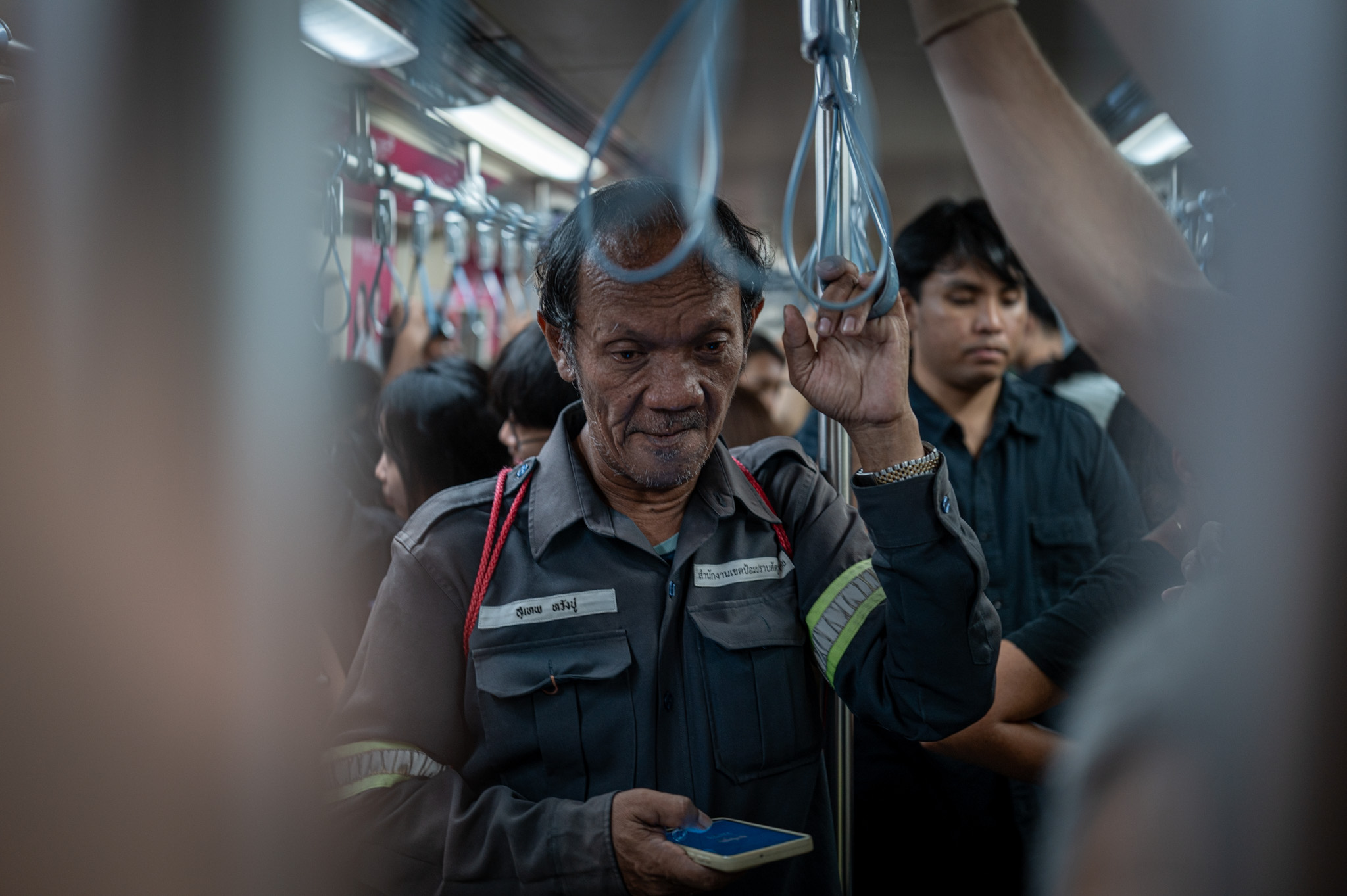
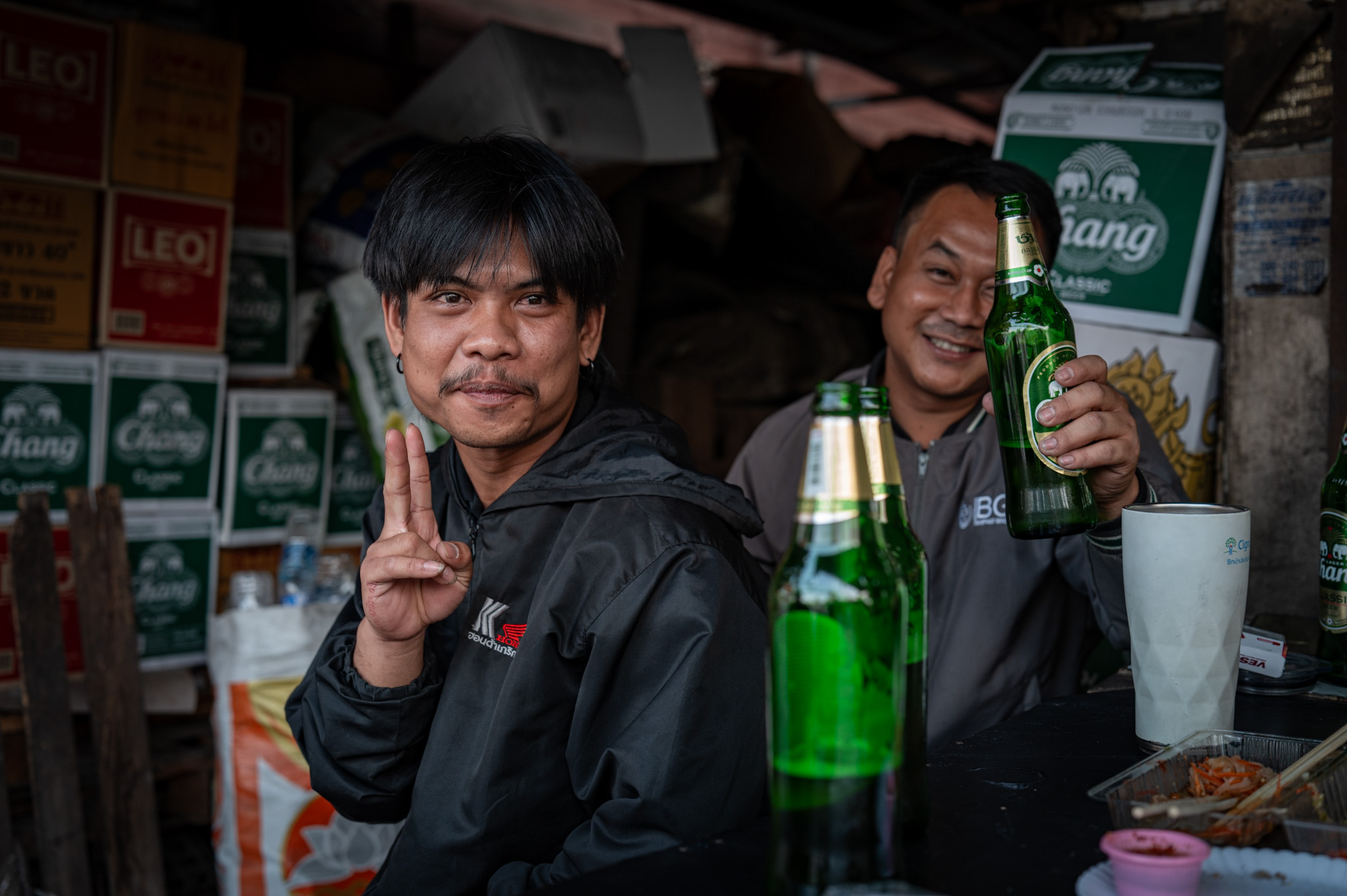
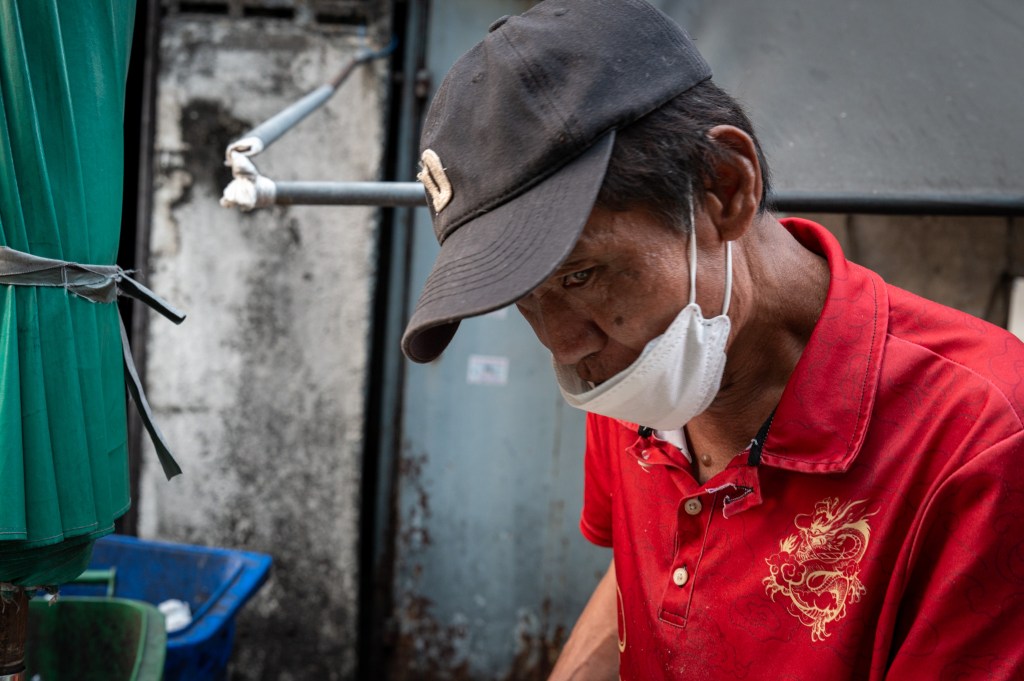
Eyes. Faces, too, reveal themselves differently at one meter close. Not the posed faces of portraits, but working faces: focused, tired, indifferent, amused. Faces that do not perform for the camera because they are too busy performing life. Eye-level photography removes hierarchy. You are no longer above or below your subject; you are beside them. This proximity creates a quiet contract: you observe, but you do not dominate.
Why does eye-level matter in understanding cities? Because cities are not abstractions. They are not master plans or policy documents or aerial views. Cities are lived systems, held together by habits, compromises, and repeated actions. When photographed from above, a city looks efficient or chaotic. When seen at walking height, it reveals its ethics.
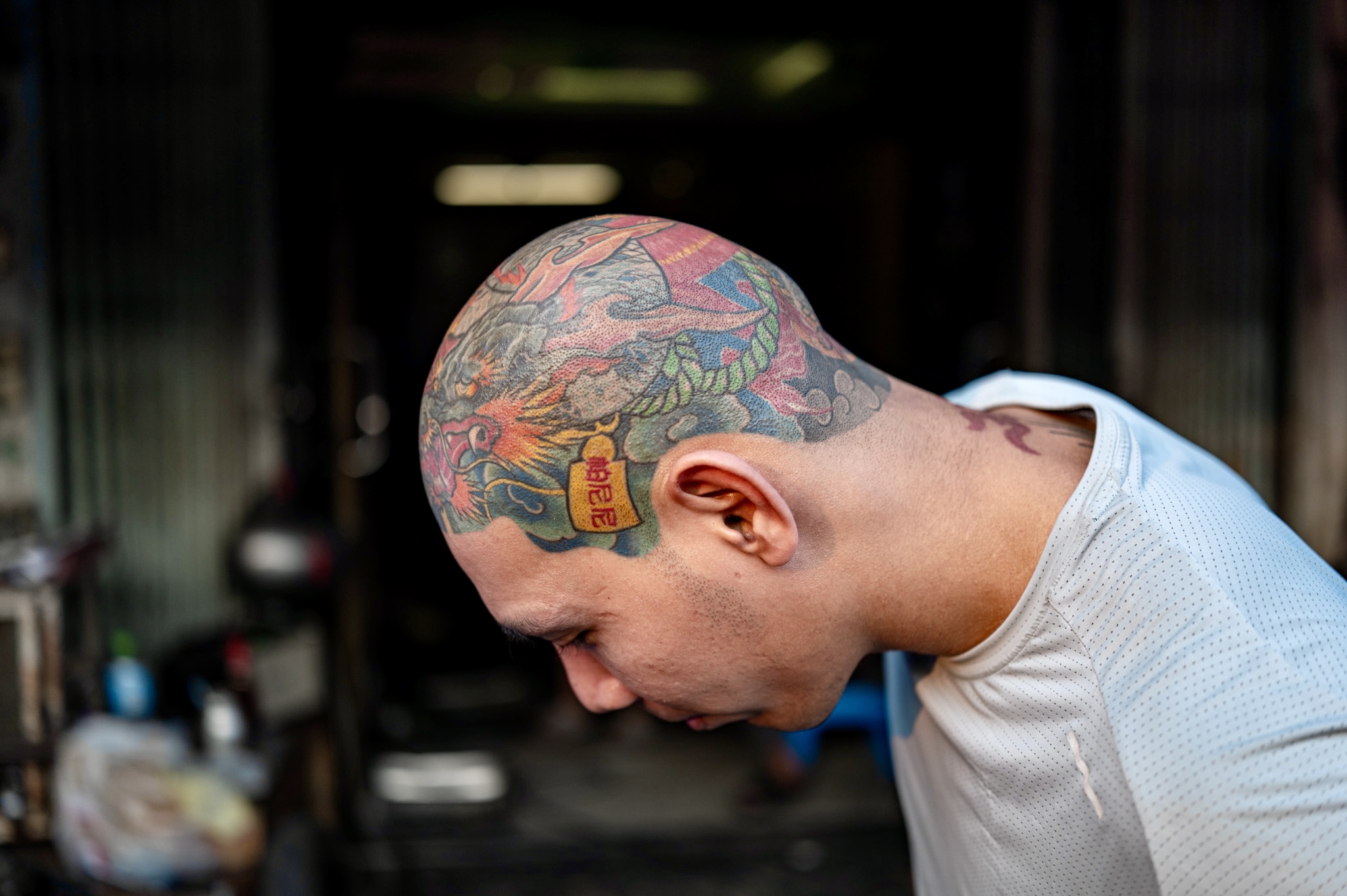
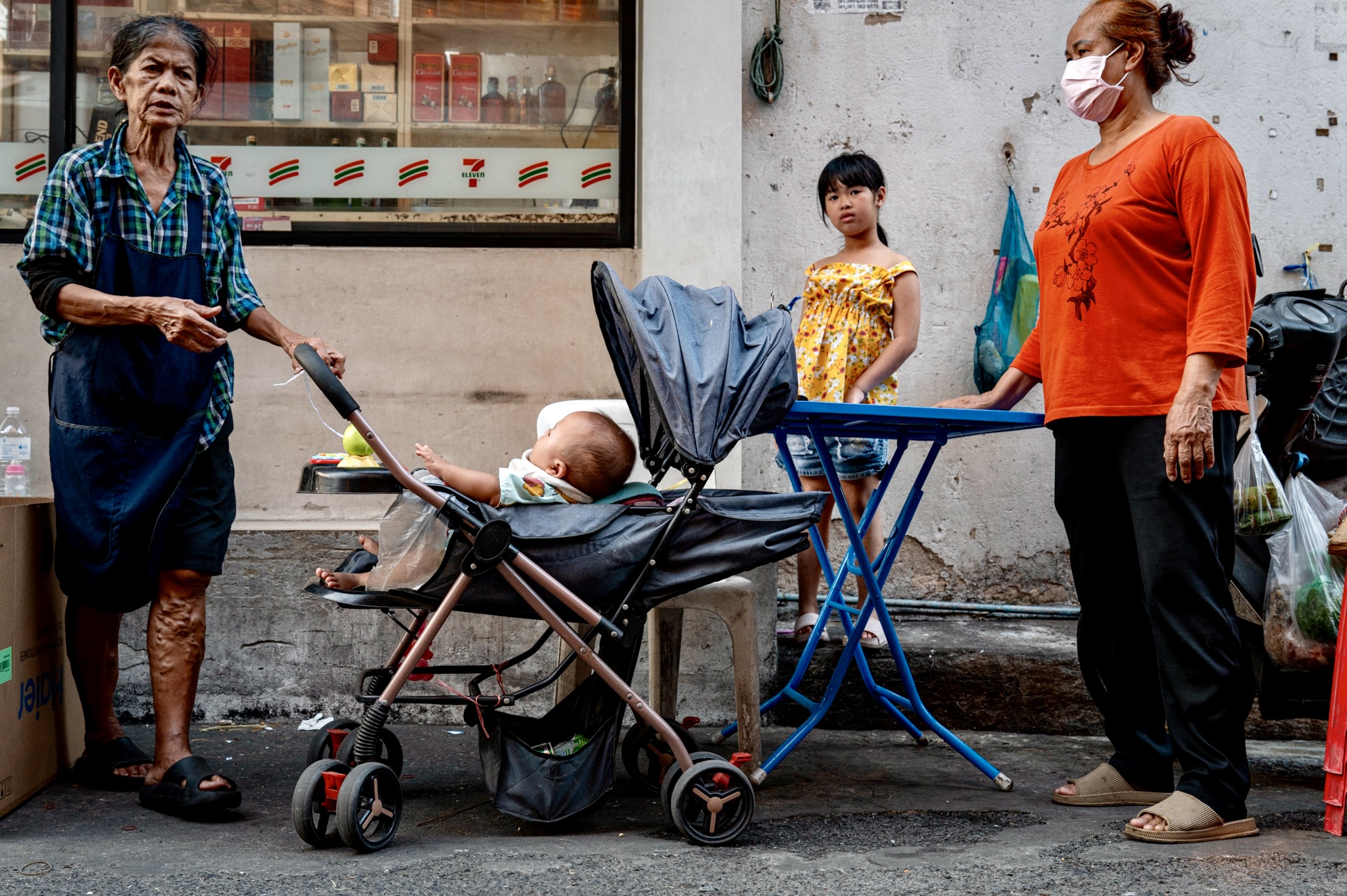
Bangkok at one meter close teaches humility. It asks the photographer to slow down, to accept partial views, to work with obstructions—elbows, steam, passing bodies. It rewards patience, not control. From this perspective, beauty is accidental and truth is constant.
This is not Bangkok as postcard. This is Bangkok as encounter.
I am spending an entire week in Bangkok, rediscovering once again that this Asian metropolis is a rich, simmering broth of people, sensations, moments, encounters, lights, smells, and constant movement. The human experience here is intense, never sterile. Contact and the sharing of space are part of a living, dynamic code of social interaction.
The photographs were taken over these days with my Leica Q3 43.


 the-quiet-report.com
Leave a comment