 The streets look like being bombarded for ages. Holes are real craters, and the local driver has immediately demonstrated his total lack of skills on avoiding them. The guy would be challenged to even move a tricycle.
The street lamps are crumpled, twisted in the agony following decades of crashes. Some look like death snakes on the ground.
Skeleton of abandoned cars are on the side of the road. Cannibalized like chewed by hyenas. Any usable part, or anything that can be even remotely reused, has been teared off.
I’ve already been traveling for almost an hour and the sun has yet to rise My plan is to reach Karl Marx Beach as they call it here, in Angola: the local and more rusty version of Namibia’s skeleton coast, located a few thousand kilometers further South.
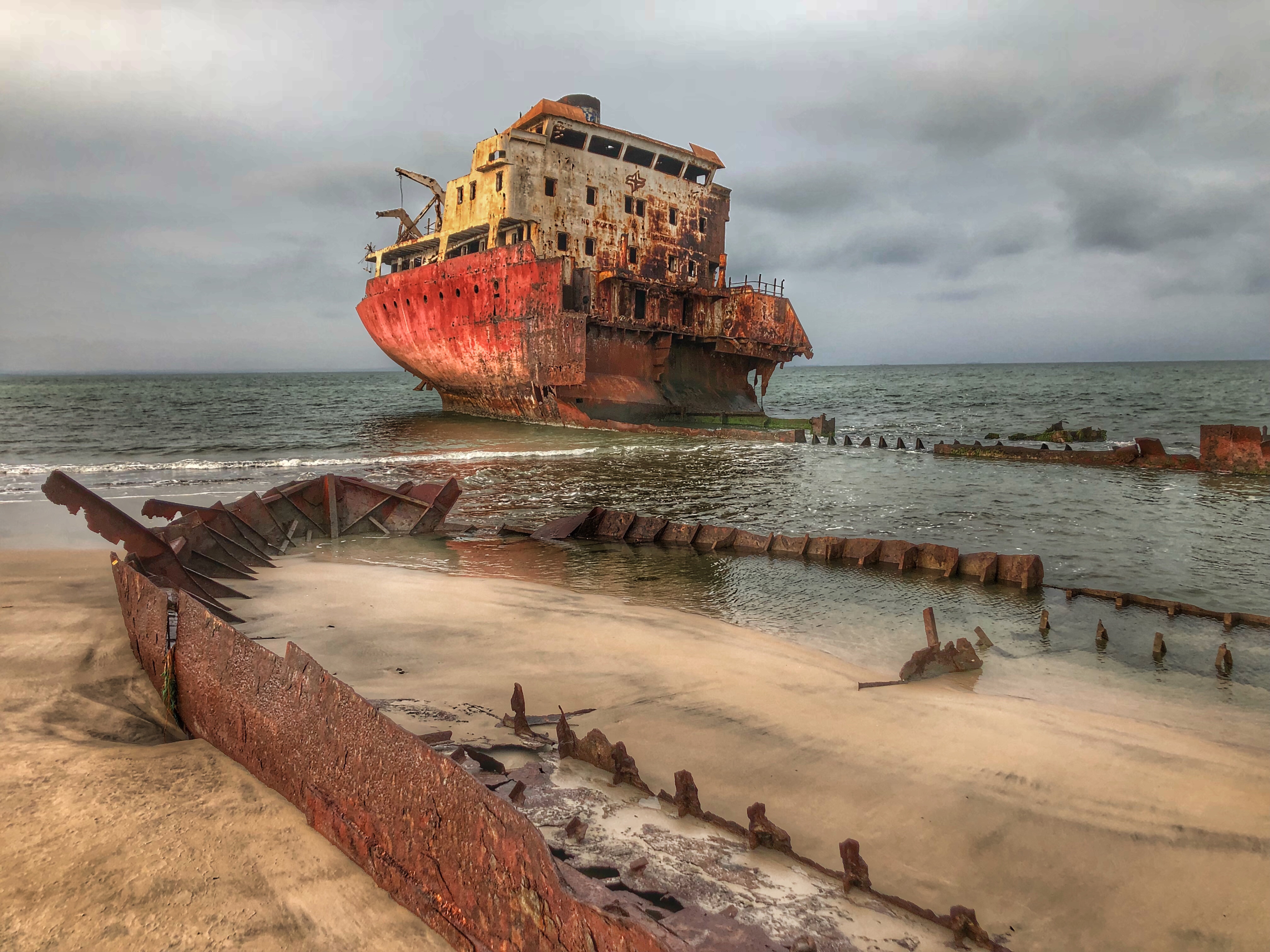
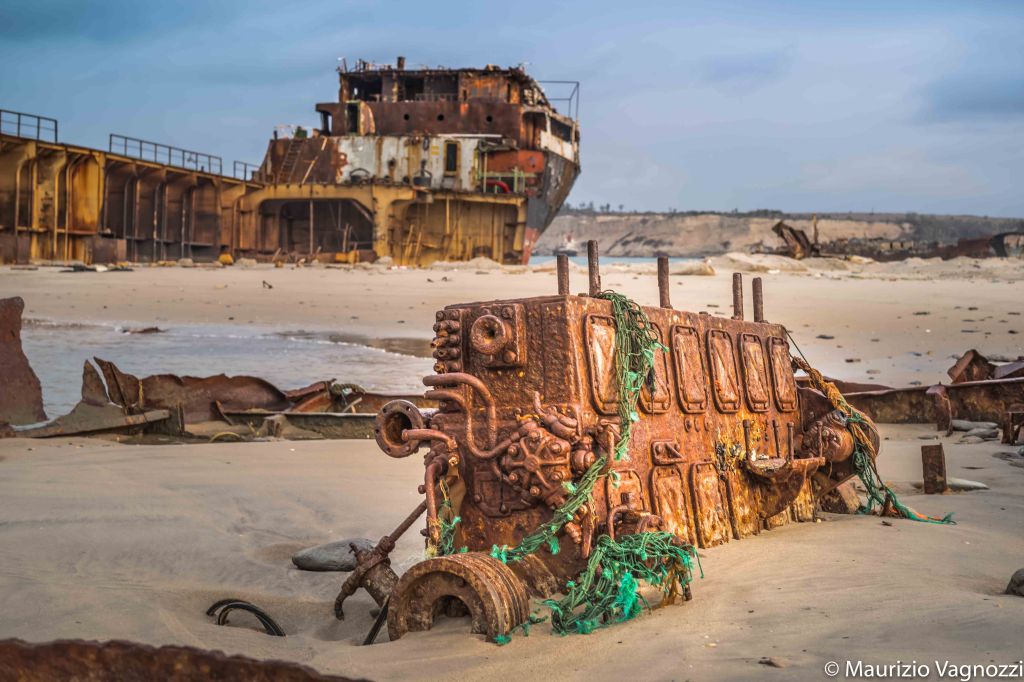
Wrecked ships, stranded for decades, now reduced to rusty skeletons. One of them still shows the name, Karl Marx, a medium tonnage merchant ship once registered at the port of Luanda.
After we left the tiny commercial center of Luanda, capital of Angola, we have passed through a sort of disused logistics hub, before reaching the northern municipalities.
Shantytowns where hundreds thousands of people live under corrugated metal roofs. Absence of paved roads, electricity, drinking water distribution, and sewerage. Life is marked through the times of micro-commerce for those who remain, and the transhumance aboard the white and blue vans, urban transport for those who have a job somewhere.
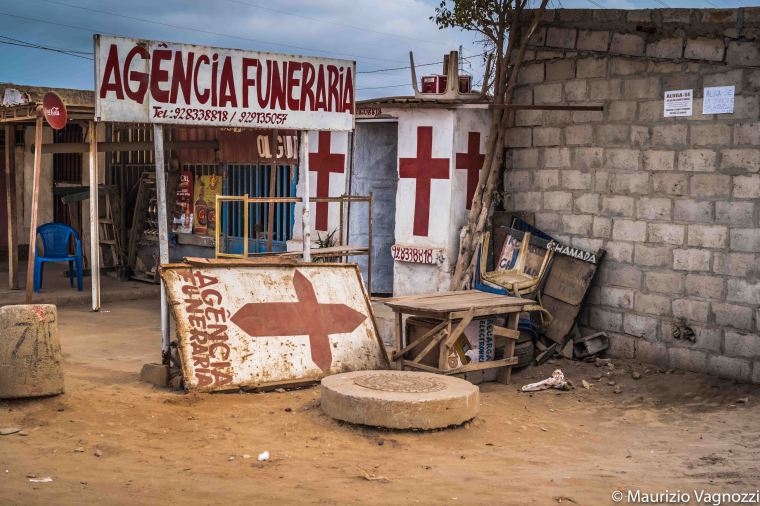
A funeral home marks the direction toward a white track paved by sand and rubbish. The tarmac is made by plastic bottles and flip flops will: this road will drive us to the Ocean.
Rural life here is synonymous of poverty. Large part of the territory is still mined and the agriculture will never have the development the tropical climate could boost. We cross a few old motorbikes: they are the local version of uber, picking up those who have to reach the nearest coach station.
Rusty ships skeletons are coming to be visible, in the mist. The Atlantic Ocean here combines haze with fogs and strong currents, pushing anything from the open sea to the shore. It was impossible, before the development of maritime engines, to resume navigation and ships were condemned to be stuck here forever.
We park a few hundreds meters from the beach.
I start walking carefully, holding my Leica. The carpet of dust and dirt under my feet hides iron, glass and anything else that could harm and injury you.
A pale sun comes out at times, not fully convinced of the work it should do every day. The scenario is post-atomic.
Dystopia is the word that sounds in my ears.
Yes, the opposite of utopia.
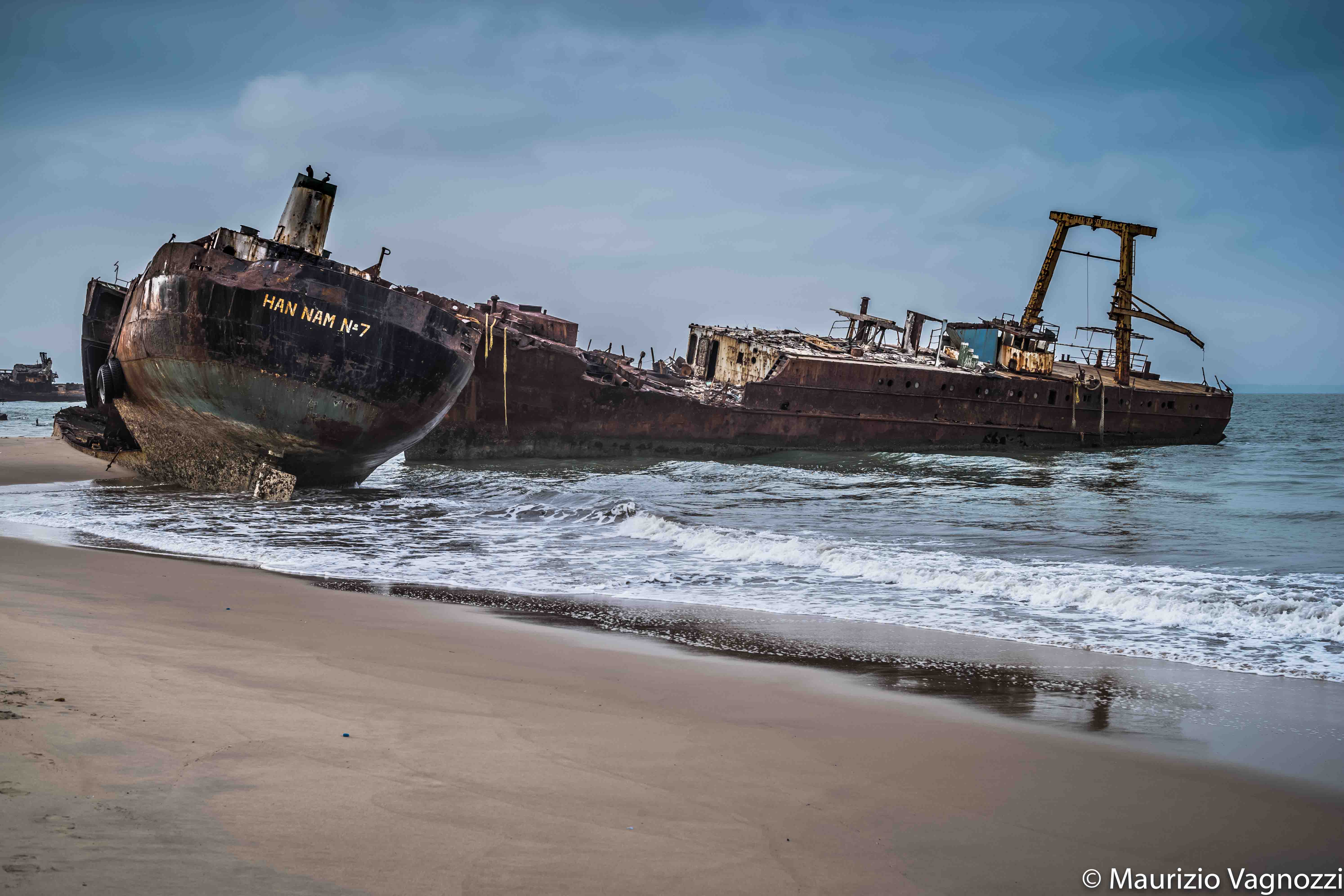
Majority of the wrecks have been completely destroyed, while others maintain almost a vital sign. A gash in the engine room of a fishing vessel still reveals a good number of cylinders in the diesel that long time ago pushed it across the sea. Part of the hull is totally separated.
Low tide lets me walk into a ship, on what was used to be a vast cargo area. Yellows and reds are the last traces of the original paints, everything else has turned into the dark brown rust. Ship names on the hulls are yelling their stories.
I am humming “I traveled the world and the seven seas” (what a magic song), while shooting memories with my eyes and a few images with my Leica M.
Total solitude.
Literature on this place is scant: abandoned ships, some anchored with their embarrassing cargoes, and the sea storms have then freed them. Others clearly beached, to carry goods, during decades of war, helping men to kill each other.
There is here a strange and almost disturbing charm or attraction, but I consider a privilege being able to visit it.

 the-quiet-report.com
Leave a comment