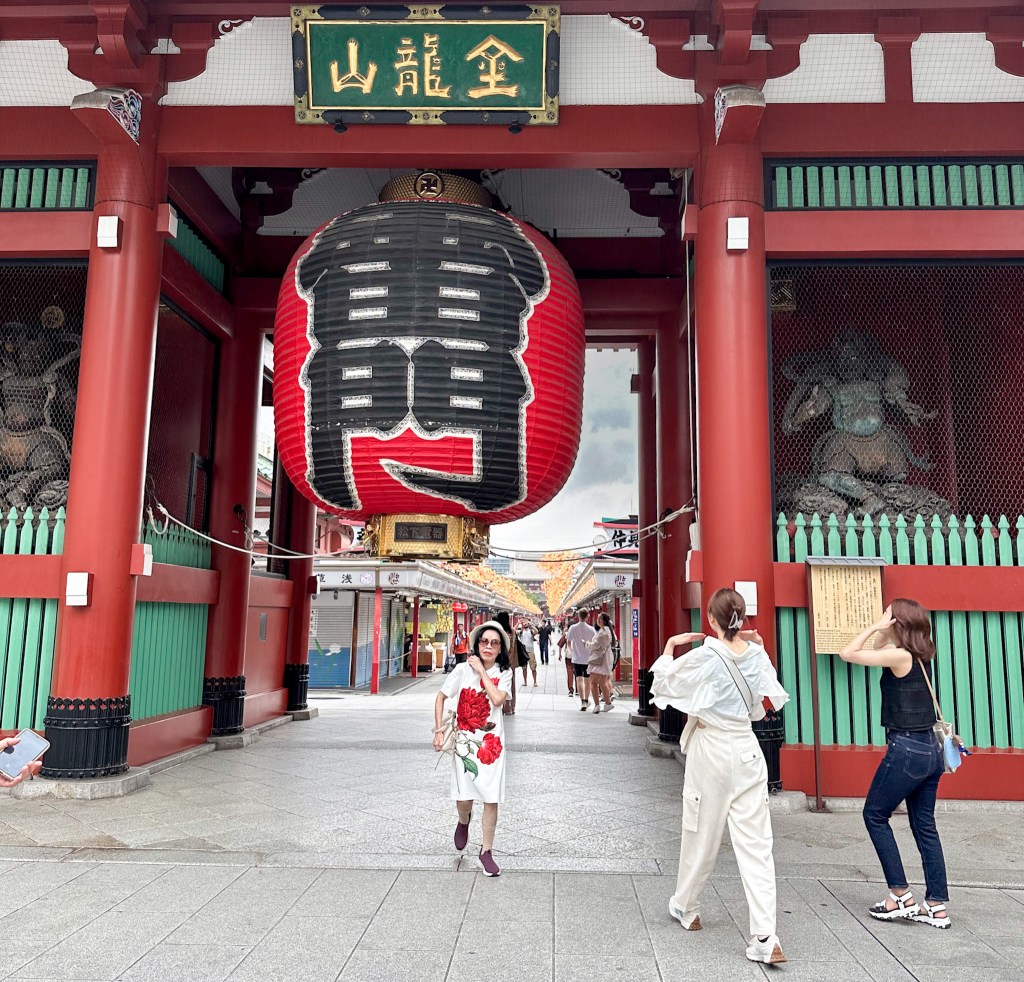
I scheduled my visit to Senso-Ji on the early morning, to avoid the mass of tourists who swing in the area when the shops around the temple are open. I also have been tempted, once more, to get my fortune reading with omikuji, the paper slips randomly picked up when in a Shrine temple. I know very well that any negative message can be left there for the monks to burn it, cancelling what I call as a pure Italian “la sfiga”.
The concept of “numeric cabala” or numerology doesn’t have a direct equivalent in traditional Japanese culture in the way that Kabbalah’s gematria operates in Jewish mysticism. However, Japan has its own numerological traditions rooted in cultural, linguistic, and historical beliefs.
Numbers in Japan often carry specific meanings due to their phonetic sounds. These associations can lead to superstitions or particular interpretations: let me try to share what I understood, thanks also to a similar believe I already met while living in Singapore and around China.
Four (4) – Shi in Japanese: This number is avoided because “shi” can also mean “death.” It’s similar to the Western fear of the number 13 or 17 for Italians. Buildings might skip the fourth floor, and products or gifts in sets of four can be considered inauspicious.
Seven (7) – Shichi/Nana in Japanese: “Shichi” sounds like “pain,” so some prefer to use “nana” for seven. However, the number seven also has positive associations in certain contexts, like the “Tanabata” festival celebrated on the seventh day of the seventh month.
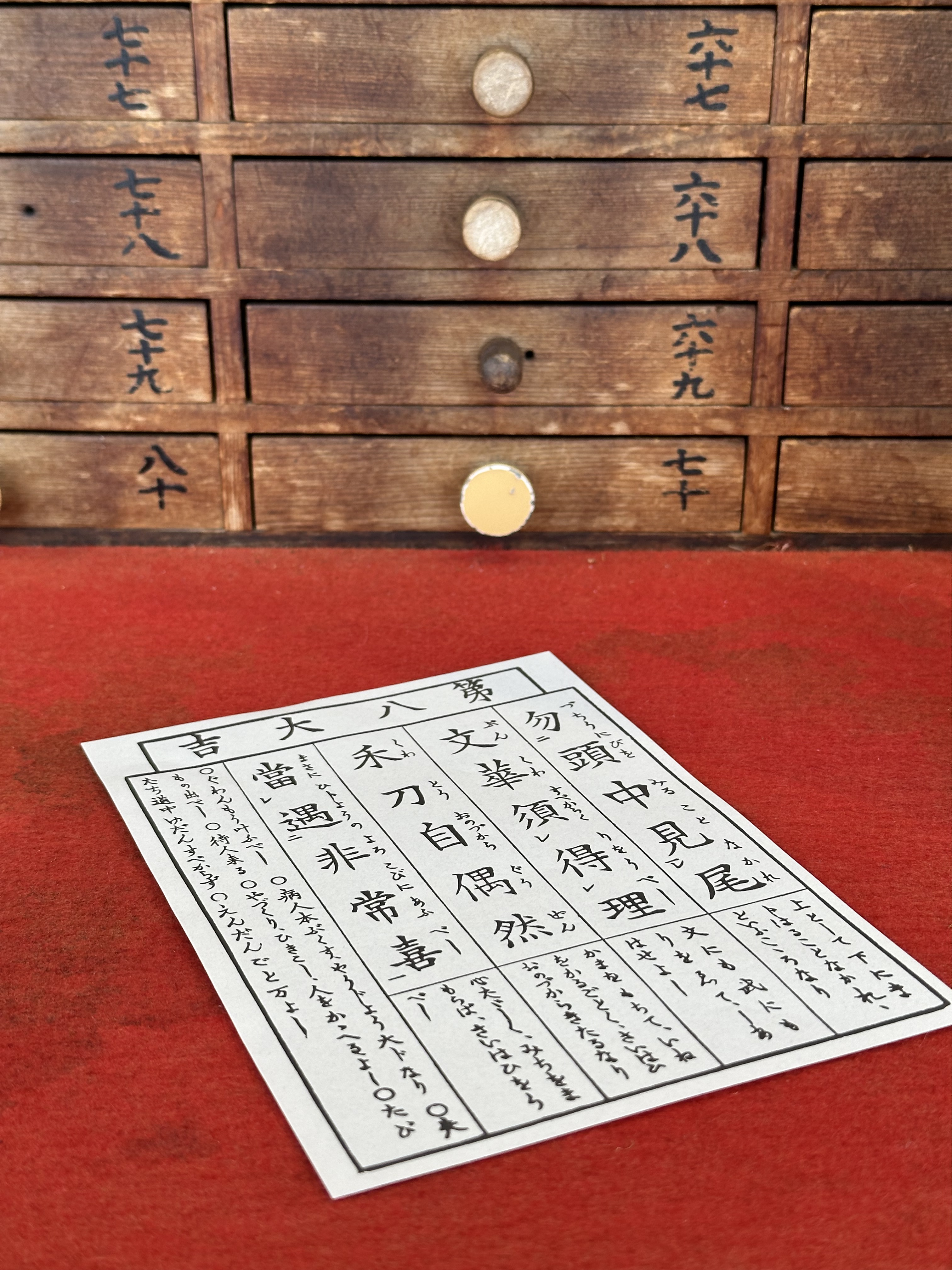
Eight (8) – Hachi in Japanese: This number is seen as lucky because its shape resembles infinity, and it sounds like the word for “multiply,” indicating growth and prosperity.
Nine (9) – Ku in Japanese: Can mean “suffering” and might be avoided for that reason.
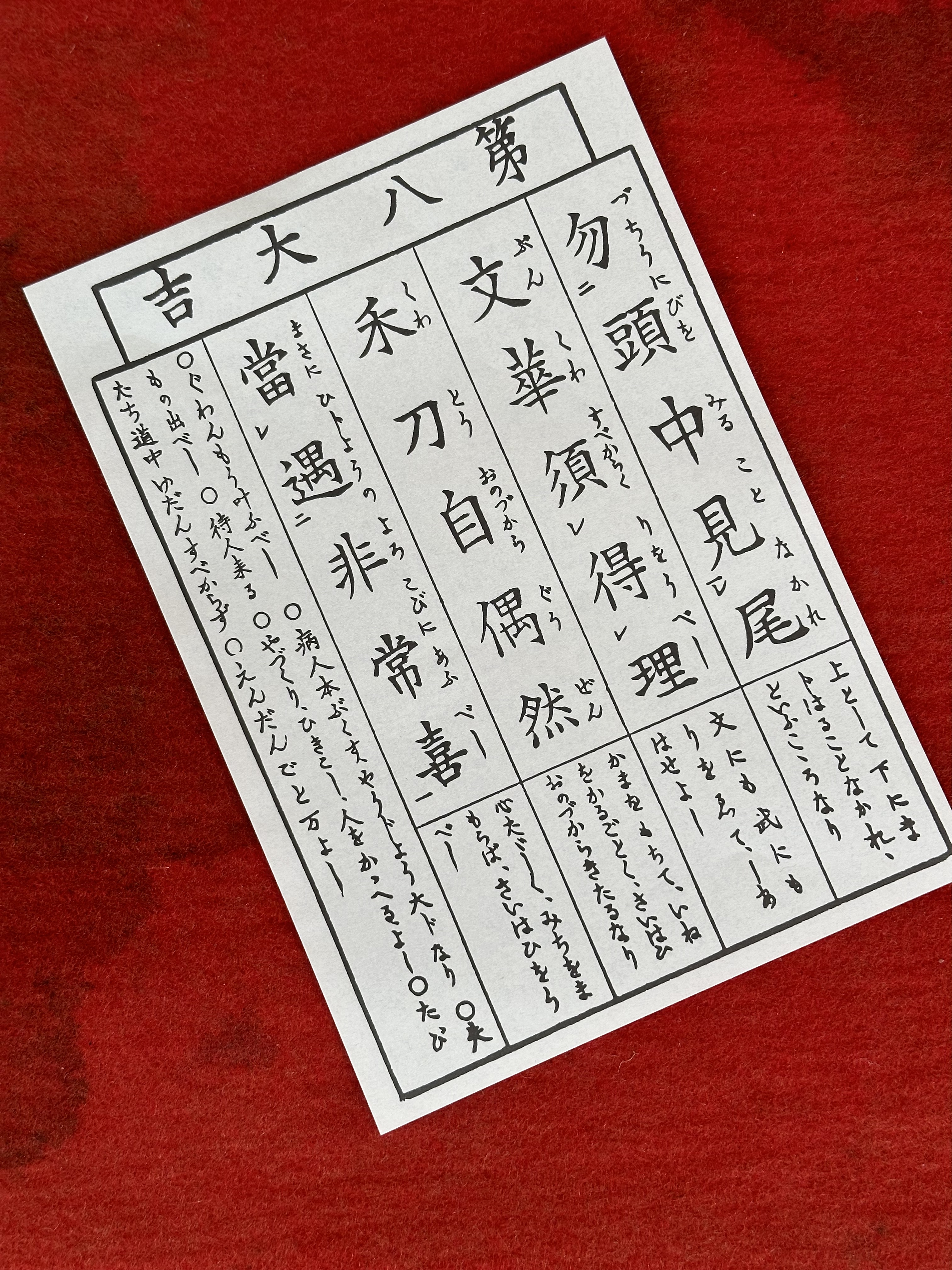
Now, you may be asking, after shaking the number drawn, what I have picked, and what was the fortune teller saying ….
Addendum:
My dear friend Keiji has sent me a few additional infos on my drawing:
Congratulations on drawing “Daikichi 大吉” (Best Fortune) in your fortune slip!
It’s the best result you can get, and I’m sure it signifies good things ahead.
The five Chinese characters written on the fortune slip are called “Kanbun 漢文” which is an archaic style of Japanese writing.
Many Japanese find it difficult to read or understand.
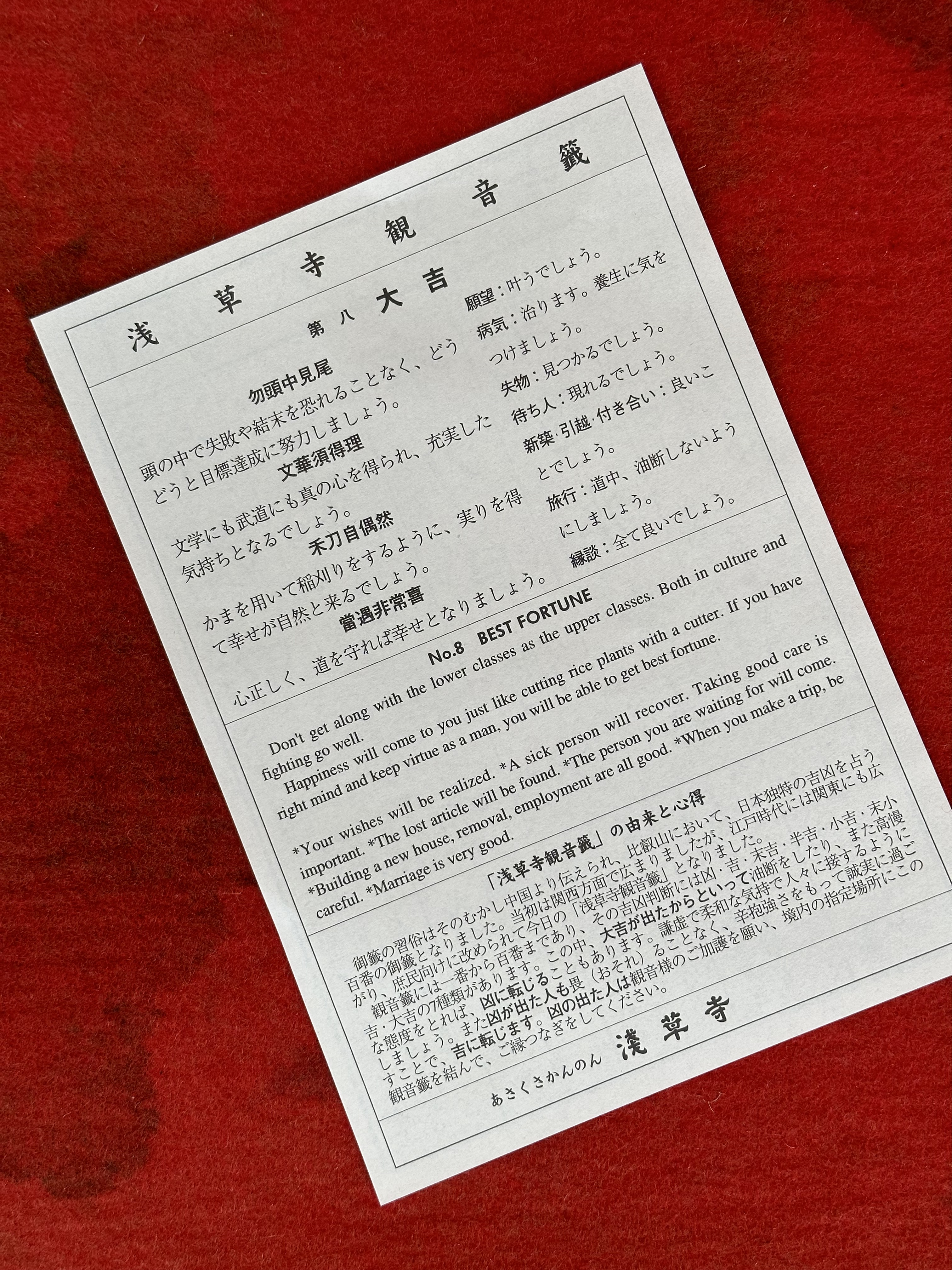
Therefore, there is an explanation in contemporary Japanese on the reverse side.
The English translations you provided have slightly different connotations, but I understand the intended meaning as follows:
勿頭中見尾
“Let’s endeavor to achieve our goals with confidence, without fearing failure or the outcome.”
文華須得理
“In both literature and martial arts, you will find a sense of fulfillment.”
禾刀自偶然
“Just as one harvests crops with a sickle, you will naturally find happiness.”
富遇非常喜
“With a righteous heart and adherence to the path, happiness will be yours.”
 the-quiet-report.com
Leave a comment