The Tokyo Metro, known as one of the busiest and most intricate subway systems in the world, serves as the lifeblood of the sprawling metropolis of Tokyo. With over 13 lines stretching across the city and connecting its various wards, it provides an efficient means of transportation for millions of residents and tourists alike. However, the Tokyo Metro is not just a means of conveyance; it is a reflection of Japan’s commitment to punctuality, order, and its unique cultural tapestry.
First and foremost, the Tokyo Metro is the epitome of efficiency. Japanese society places a high value on punctuality, and the metro system exemplifies this cultural trait. Delays are rare, and when they do occur, they are often a matter of minutes. Furthermore, the frequency of the trains, especially during peak hours, ensures that passengers rarely have to wait long. This precise scheduling, combined with clear signages in both Japanese and English, aids in easy navigation even for first-time users.
The design and layout of the metro stations are also indicative of the Japanese philosophy of maximizing space. Given Tokyo’s high population density and limited land availability, stations are often built deep underground with multiple levels and layers. Escalators and elevators are strategically placed to manage the flow of people, and platforms are optimized to handle large crowds, particularly during rush hours. This sometimes comes as a surprise to the foreign passenger, who is expecting a more symmetrical and simple logic on platform as directions: just wash up your “simple” brain and dive into a different logic, that’s my tip here.
In addition to its structural efficiency, the Tokyo Metro serves as a cultural showcase. Each station, especially those in historic or popular districts, often features artwork or displays that provide insights into the area’s history or significance. For instance, the Ueno station is adorned with art inspired by the nearby Ueno Park and its museums, while the Nihombashi station reflects the Edo period aesthetic, harking back to its history as the commercial center of Tokyo.
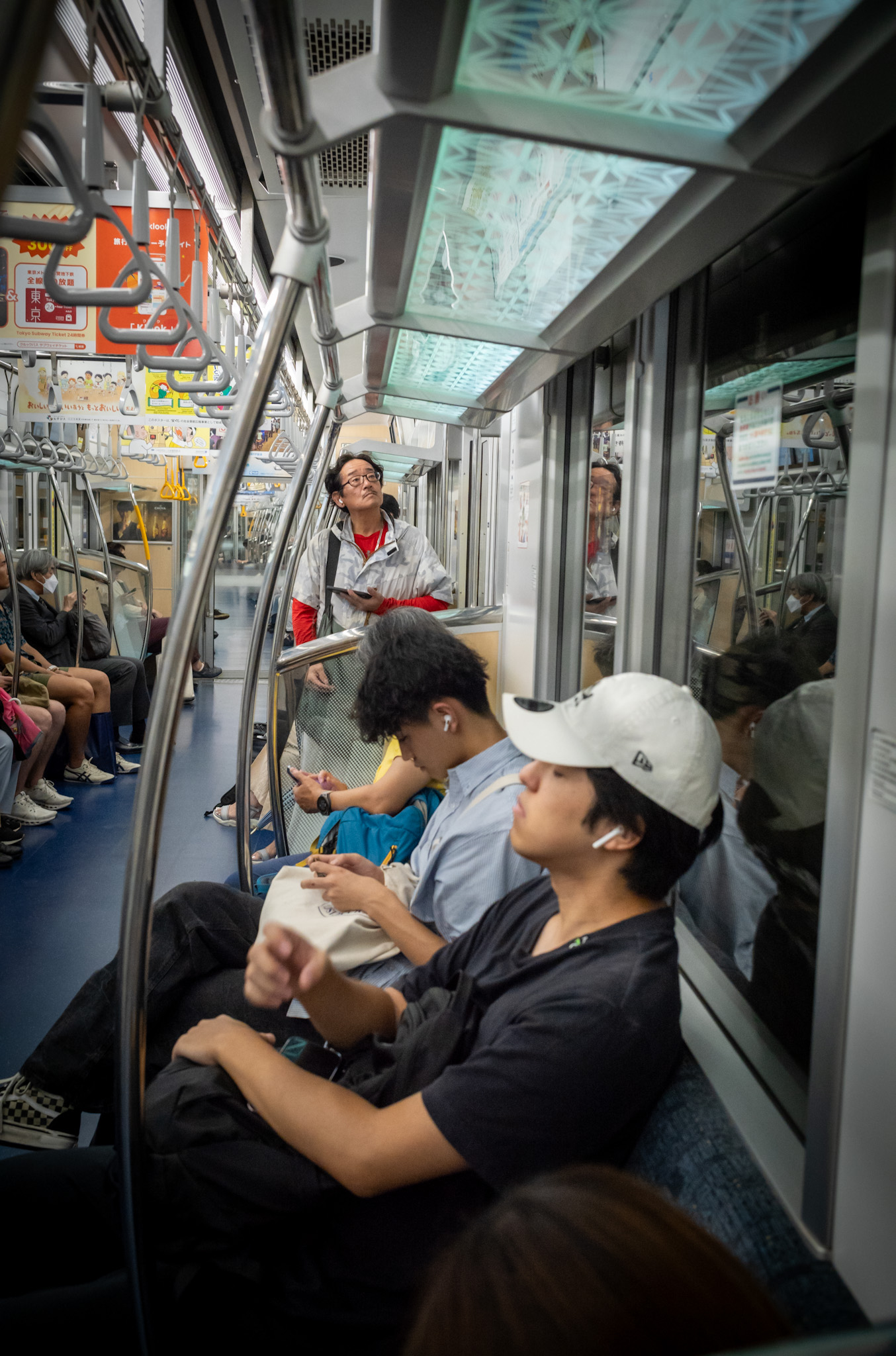
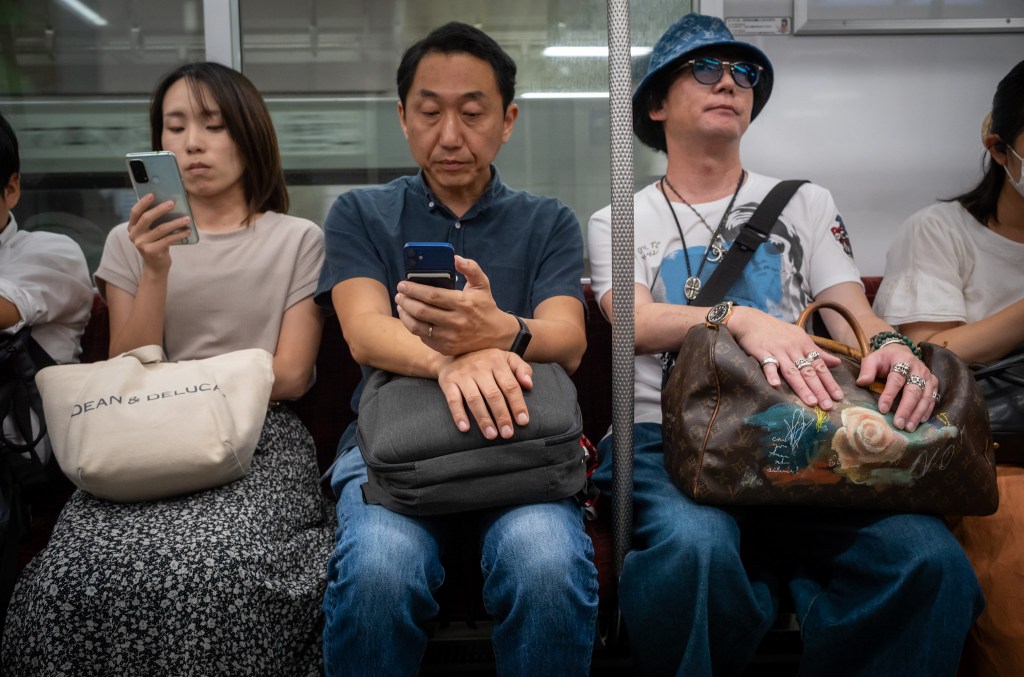
Behavior of passengers on the Tokyo Metro is a lesson in etiquette and respect for shared spaces. It’s commonplace to see commuters standing in orderly lines, waiting for the train to arrive, or maintaining silence inside the carriages to avoid disturbing others. Such a level of discipline and courtesy is rarely seen in public transport systems elsewhere in the world: whe you hear someone talking loudly or on the phone, give that as granted, it is a tourist.
It is extremely interesting to know that the metro is not operated by a single company. Tokyo Metro is operated by the Tokyo Metro Co., Ltd. (東京地下鉄株式会社, Tōkyō Chikatetsu kabushiki-gaisha), a joint-stock company jointly owned by the Government.
The other major subway operator is Tokyo Metropolitan Bureau of Transportation (Toei Subway) which is owned solely by the government of Tokyo. Tokyo Metro and Toei trains form completely separate networks, although Tokyo Metro Namboku Line and Toei Mita Line share the same track between Meguro Station and Shirokane-takanawa Station.
This should then not surprise you when, connecting between 2 different lines, in certain cases you may need to exit completely from one station, and walk to a different one, as they are not “interconnected” as we may usually expect
Traveling around is quite easy, as train stops and connections are announced in both English and Japanese, and also ticket machines have multilingual interface.
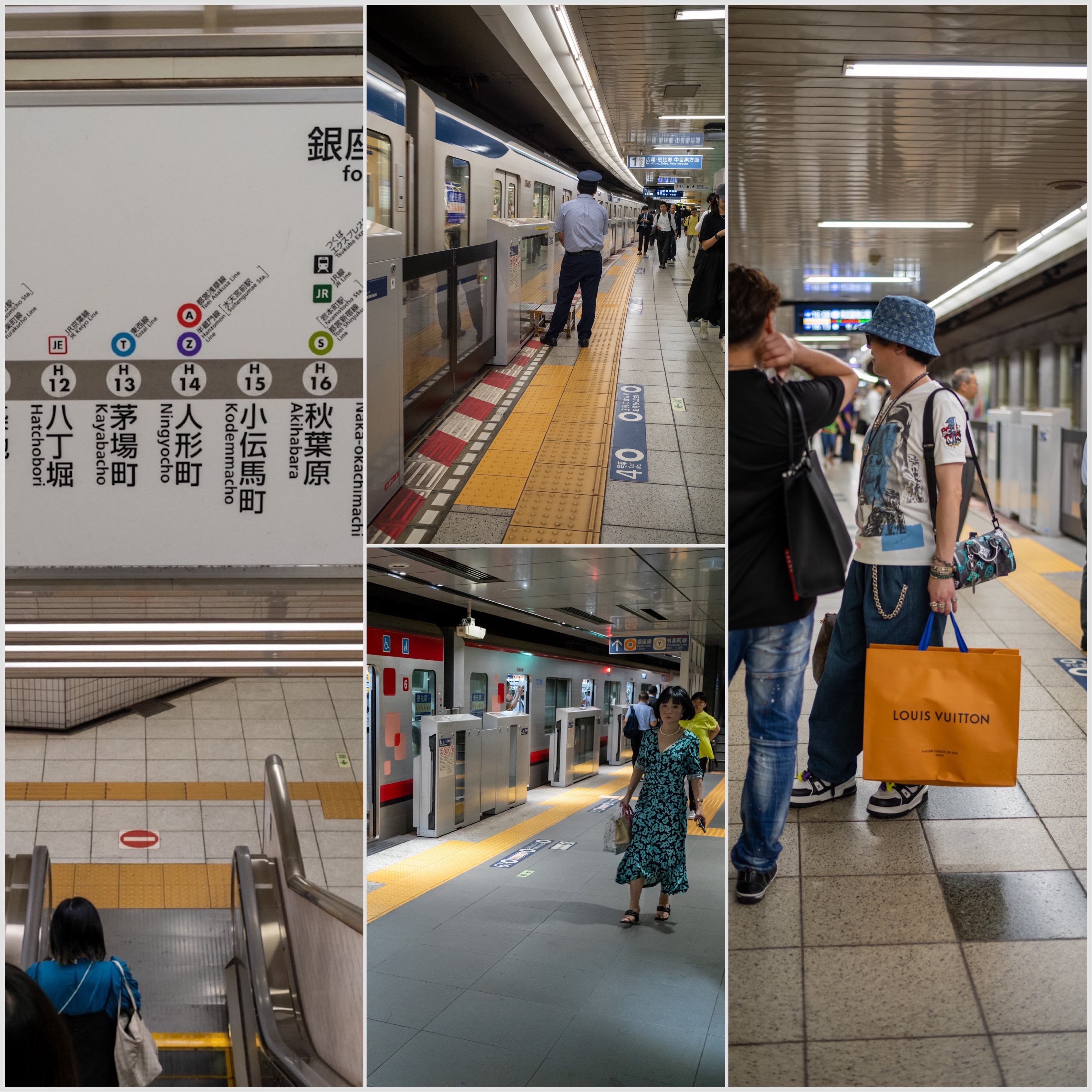
Train stations are now also consecutively numbered on each color-coded line, allowing even non-English speakers to be able to commute without necessarily knowing the name of the station. Basically with color, the letter of the line, and the station number, you have one of the simplest navigation reference, making not impossible, but quite difficult to get lost
As I said before, punctually is a religion here: regular trains are arriving 3 to 6 minutes apart most of the day and night, moving and an average of 12,4 million people every day (2021 data).
 the-quiet-report.com
Leave a comment