Origami, from the words “oru” (to fold) and “kami” (paper), is the intricate art of paper folding that originated in Japan. With roots tracing back to the 6th century, origami has evolved from simple paper folds to intricate designs.
The earliest records suggest that origami was initially used for religious ceremonies, as it was believed that folded papers represented purity. Over time, its practice expanded beyond religious contexts. The Samurai, for instance, exchanged folded paper strips, known as ‘noshi’, as a token of goodwill.
The essence of origami lies in its simplicity. All you need is a flat, square sheet of paper. No scissors, no glue, just your hands and the paper. Traditional origami paper, or “kami”, is lightweight, making it easy to fold, and it often has different colors on each side. However, modern origami artists, or “folders”, have ventured beyond these conventions, using various types of papers and even incorporating cuts when necessary to achieve their desired designs.
What’s truly fascinating about origami is its application of mathematical principles. The intricate folds, creases, and designs can often be described using geometric terms. Some advanced origami projects might involve complex mathematical calculations to ensure precision. In fact, there’s a whole subfield, known as computational origami, that explores the mathematical rules and theories behind paper folding.
Beyond just art and mathematics, origami has inspired solutions in various scientific fields. Engineers have taken cues from origami to design compact satellite equipment that can unfold in space. Medical researchers have looked at origami principles to design tiny, foldable devices that can navigate through the human body.
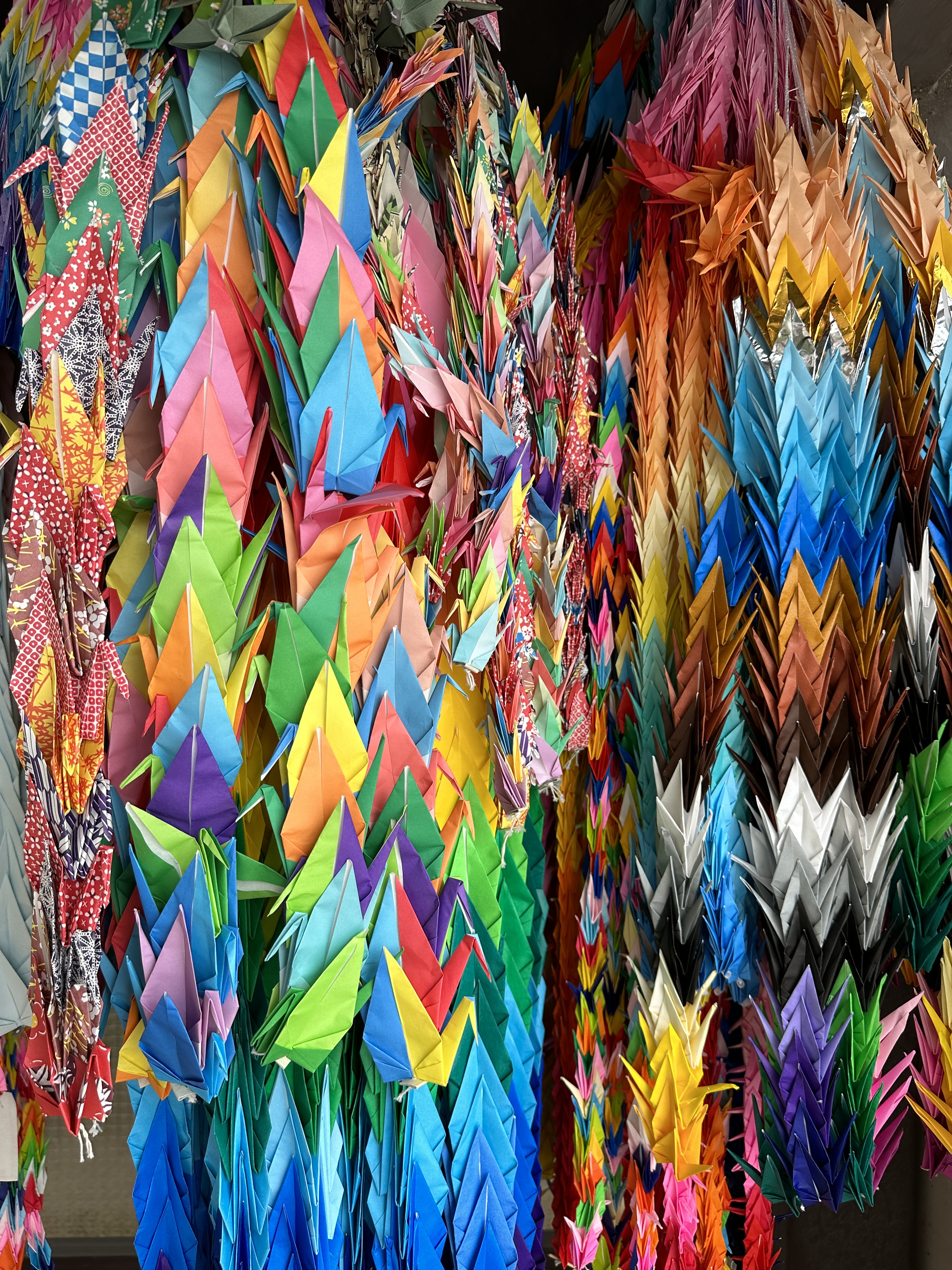
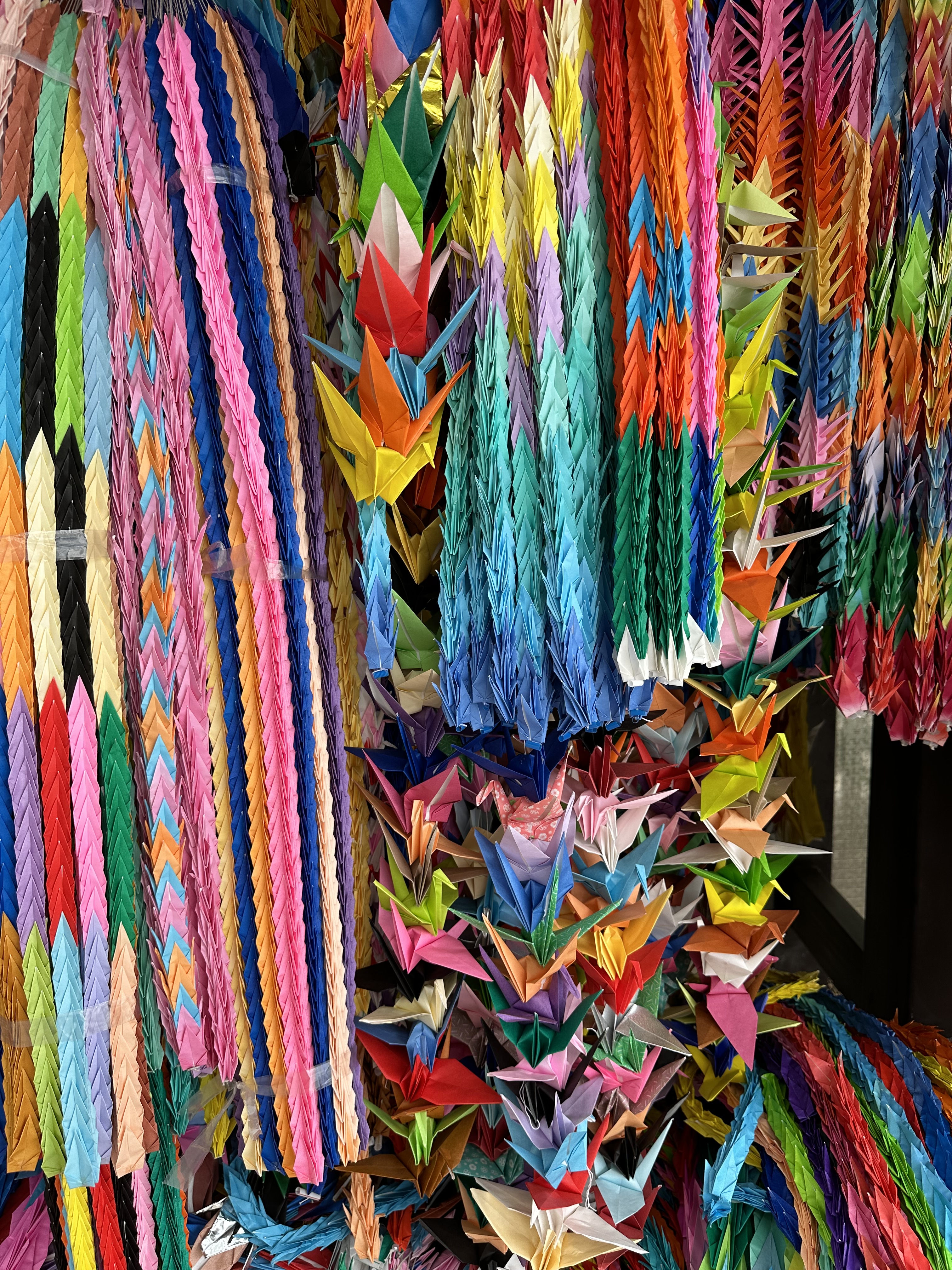
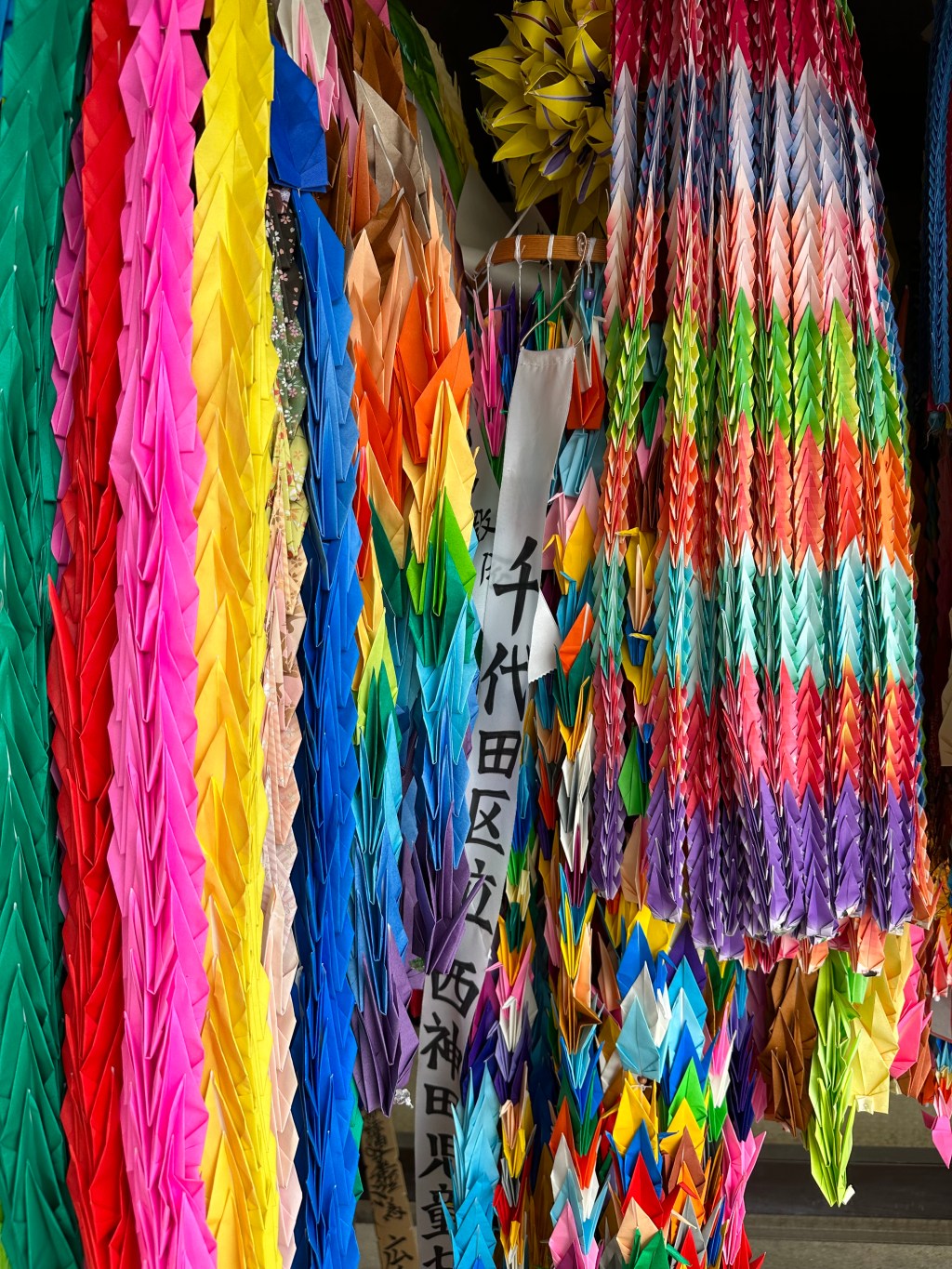
One of the most iconic origami designs is the crane. It’s not just a test of skill but also carries significant symbolism in Japanese culture. Legend has it that if one folds a thousand paper cranes, a wish will be granted. This belief was popularized by the story of Sadako Sasaki, a Hiroshima atomic bomb victim, who hoped to fold a thousand cranes to recover from her illness.
Born in Hiroshima, Japan, in 1943, she became an unwitting symbol for the horrors of nuclear warfare and the subsequent push for peace.
In 1955, at the age of 12, Sadako was diagnosed with leukemia, attributed to the radiation she was exposed to when the atomic bomb was dropped on Hiroshima in 1945. She was just two years old at the time of the bombing. In the hospital, inspired by the Japanese legend that promises a wish to anyone who folds a thousand origami cranes, Sadako embarked on a mission to fold a thousand of them, hoping to recover from her illness. Her determination and hope became emblematic.
Sadako’s early death, just months after her diagnosis, deeply moved her classmates and the wider Japanese community. Her story quickly spread, turning her into an enduring symbol of the innocent victims of nuclear warfare. This led to a national campaign to build a Children’s Peace Monument in Hiroshima, dedicated to Sadako and all child victims of the atomic bomb. Today, the statue of Sadako holding a golden crane stands tall in Hiroshima’s Peace Memorial Park, inscribed with the words: “This is our cry. This is our prayer. Peace in the world.”
 the-quiet-report.com
Leave a comment