“Hi Ryu, I was checking my photos from yesterday, and I must recognize that I’m having difficulties in focusing at full aperture f/1.4”, I wrote to my my friend in Milan, the most knowledgeable man I know on Leica, after being a bit disappointed on some frames I shoot the night before in Fukuoka.
“I understand it might be difficult, mostly in extreme low light conditions”, he replied, kindly avoiding to say I’m getting old, and my eyes are not anymore what they were used to be. “You can either leverage auto-focus, or to increase your tolerance and forgiveness, and I personally have adopted the second solution”. “A large number of the best photos being taken during the last 100 years are slightly out of focus, regardless they are beautiful.”
“You are right, 先生 (sensei)”.
While the western part of my brain has immediately linked this to Robert Capa’s autobiography “Slightly out of Focus”, my eastern and Asian side clicked what Ryu was saying, and found in the deep of my memory the Wabi-Sabi principle, The Beauty of Imperfection, in Japanese Aesthetics.
Wabi-Sabi: The Beauty of Imperfection.
Wabi-sabi represents a core principle in Japanese aesthetics that embraces the transient and imperfect nature of life. Rooted in Zen Buddhism, it emphasizes simplicity, humility, and the inherent beauty found in the natural cycle of growth and decay.
“Wabi” initially denoted the loneliness of living in nature, away from society, and has evolved to mean rustic simplicity or understated elegance. It appreciates the quietude and inner reflection that comes from a solitary existence. “Sabi,” on the other hand, signifies the passage of time and its impact, focusing on the beauty and serenity that comes with age. When combined, wabi-sabi celebrates the imperfections, cracks, and weathered textures that bear witness to the passage of time.
This concept is evident in various facets of Japanese culture. For example, in traditional tea ceremonies, the utensils and ceramics used are often imperfect and show signs of wear, highlighting the beauty of their impermanence and use. Similarly, in Japanese pottery, the art of “kintsugi” involves mending broken ceramics with gold, illustrating that breaks and repairs are part of an object’s history, rather than aspects to disguise.
In essence, wabi-sabi offers a perspective that contrasts sharply with the modern pursuit of perfection. It invites us to find beauty in the flawed and ephemeral, and to appreciate the deeper, more authentic essence of life.
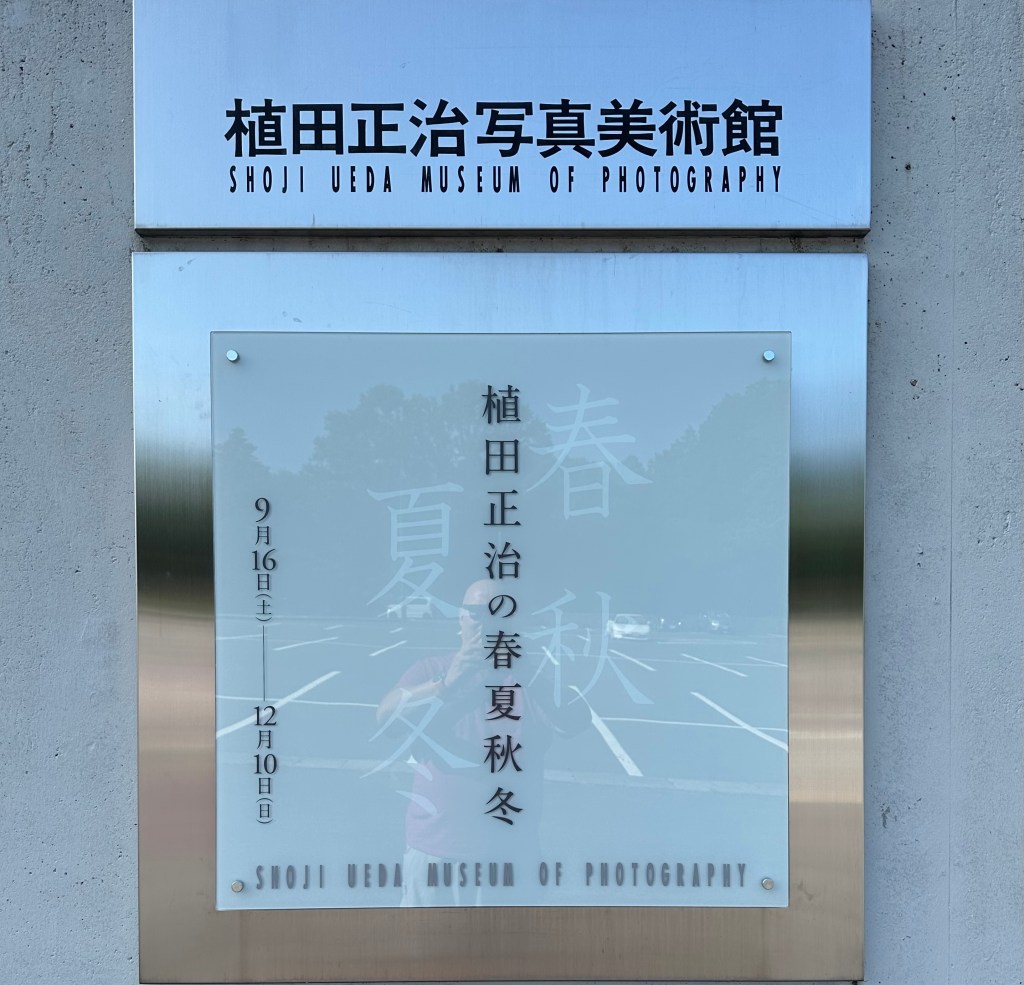
When this comes to photography, it has a name: Shoji Ueda, and this morning I visited the museum that has the largest selection of his works, in Hoki, 4 hours drive away from Hiroshima
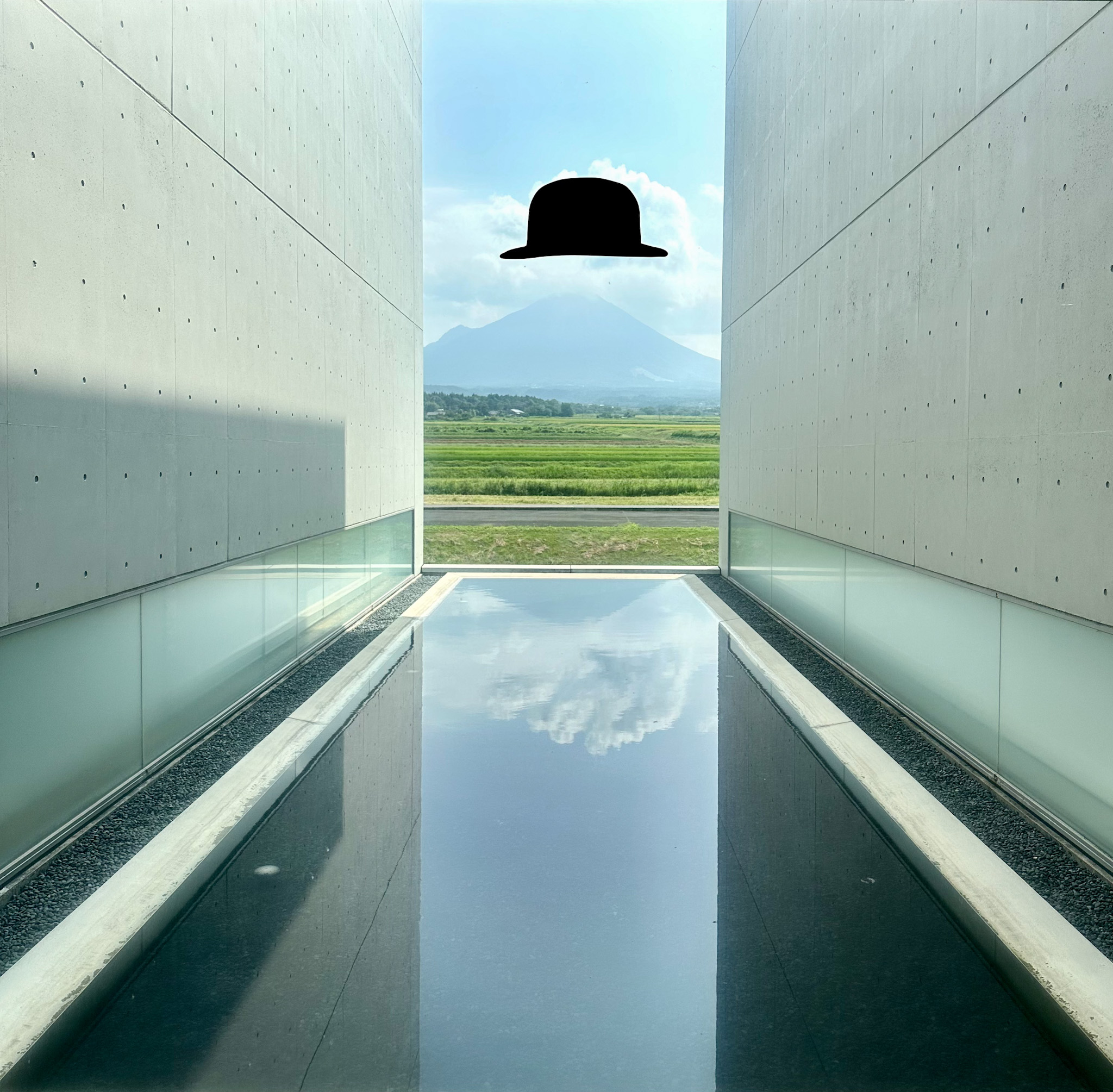
Shoji Ueda: A Luminary in Japanese Photography
In the diverse world of photography, Japan has produced numerous legendary photographers whose works have left an indelible mark on the global art scene. Among them, Shoji Ueda stands tall as one of the most influential and avant-garde photographers of the 20th century. Combining elements of surrealism with traditional Japanese aesthetics, Ueda crafted a unique visual narrative that transcended borders and earned him international acclaim.
Born in 1913 in Tottori Prefecture, Japan, Ueda’s initial introduction to photography was in his teenage years. His artistic journey began in earnest after he co-founded the Chugoku Photographers Group in 1937. It was through this platform that he began developing his distinct style, marrying elements from European modernist trends with his personal experiences in the Japanese countryside.
One of the most iconic characteristics of Ueda’s photography is the vastness and surreal simplicity of his compositions. Often set against the backdrop of the Sanin sand dunes, his subjects—whether they are solitary figures, couples, or groups—appear dwarfed by the vast landscapes, evoking feelings of insignificance in the grand scale of nature. This choice of setting, coupled with his penchant for minimalist composition, often imbues his photographs with an otherworldly aura, as if they are fragments of a dream.
Furthermore, Ueda frequently incorporated playful and whimsical elements into his work, further distinguishing his style from his contemporaries. For instance, in his series “Children the Year Round,” Ueda captures the innocent joys and fantasies of childhood. The children, often depicted in mid-air jumps or playful poses, contrast with the starkness and depth of the dunes, creating an interplay between reality and fantasy. This blend of realism with the surreal showcases Ueda’s ability to see the extraordinary in the ordinary.
Ueda’s mastery over black and white photography was particularly evident in his manipulation of tones. His adept use of light and shadow added depth and mood to his photographs, helping to emphasize the subjects and their surroundings. His work, both in terms of composition and tonality, was a testament to his profound understanding of the medium.
It’s worth noting that while Ueda drew inspiration from Western surrealism, he never lost touch with his Japanese roots. Elements of traditional Japanese art and aesthetics, such as the principles of ‘ma’ (negative space) and ‘wabi-sabi’ (beauty in imperfection), can be discerned in his works. This seamless blending of East and West, traditional and modern, made Ueda’s photography universally relatable.
In the 1970s and 80s, Ueda’s work began to gain international recognition. Exhibitions in Paris and New York introduced his unique style to a wider audience, solidifying his status as one of the leading figures in contemporary photography. Despite his international acclaim, Ueda remained deeply connected to his hometown, continuing to capture the essence of Tottori in his later works.
Shoji Ueda passed away in 2000, but his legacy as a visionary in the world of photography remains undiminished. His unique vision, blending the surreal with the everyday, challenges viewers to see the world through a different lens. In an age where images are consumed rapidly and frequently, Ueda’s photographs stand as timeless testaments to the power of the medium, urging viewers to pause, reflect, and immerse themselves in the depth and beauty of each frame.
Shoji Ueda’s contribution to Japanese photography and the global art scene is immeasurable. Being able to see such a vaste collection, as I did today, is a great honor: I cannot share any of his work, as respectful of his copyright, but please check “My Family” on line, it’s amazing!
The museum site is this: Shoji Ueda

 the-quiet-report.com
Leave a comment