It was already raining when this morning I boarded the ferry to Miyajima Island, but rain – as I would have discover later – made the Itsukushima Shrine even more beautiful, offering an amazing fusion of Spirituality and Nature.
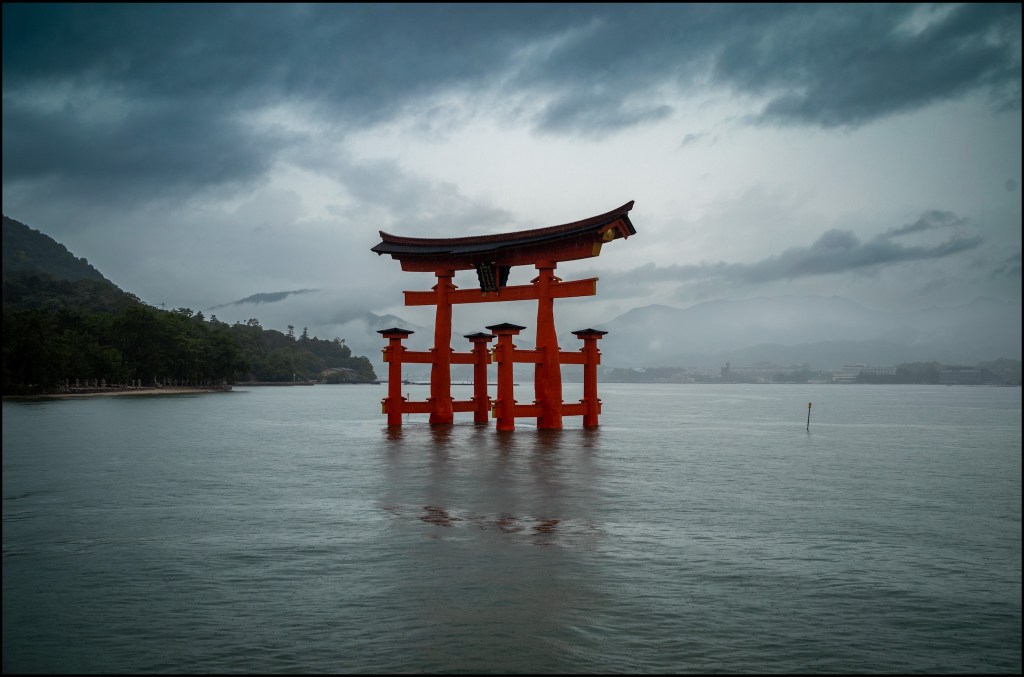
Itsukushima Shrine, is an iconic symbol of Japan, and graces the island of Miyajima in Hiroshima Prefecture. Widely recognized for its majestic “floating” torii gate, this UNESCO World Heritage Site serves as a captivating testament to Japan’s rich history, architectural grandeur, profound spiritual traditions, and incomparable match with nature.
The shrine’s inception dates back to the 6th century, making it one of Japan’s oldest religious establishments. However, the present structures largely hail from the 12th century, attributed to the ambitious rebuilding efforts by the powerful warlord Taira no Kiyomori. Throughout the ages, it has been a vital pilgrimage site, revered not just for its spiritual significance but also for its harmonious integration with nature.
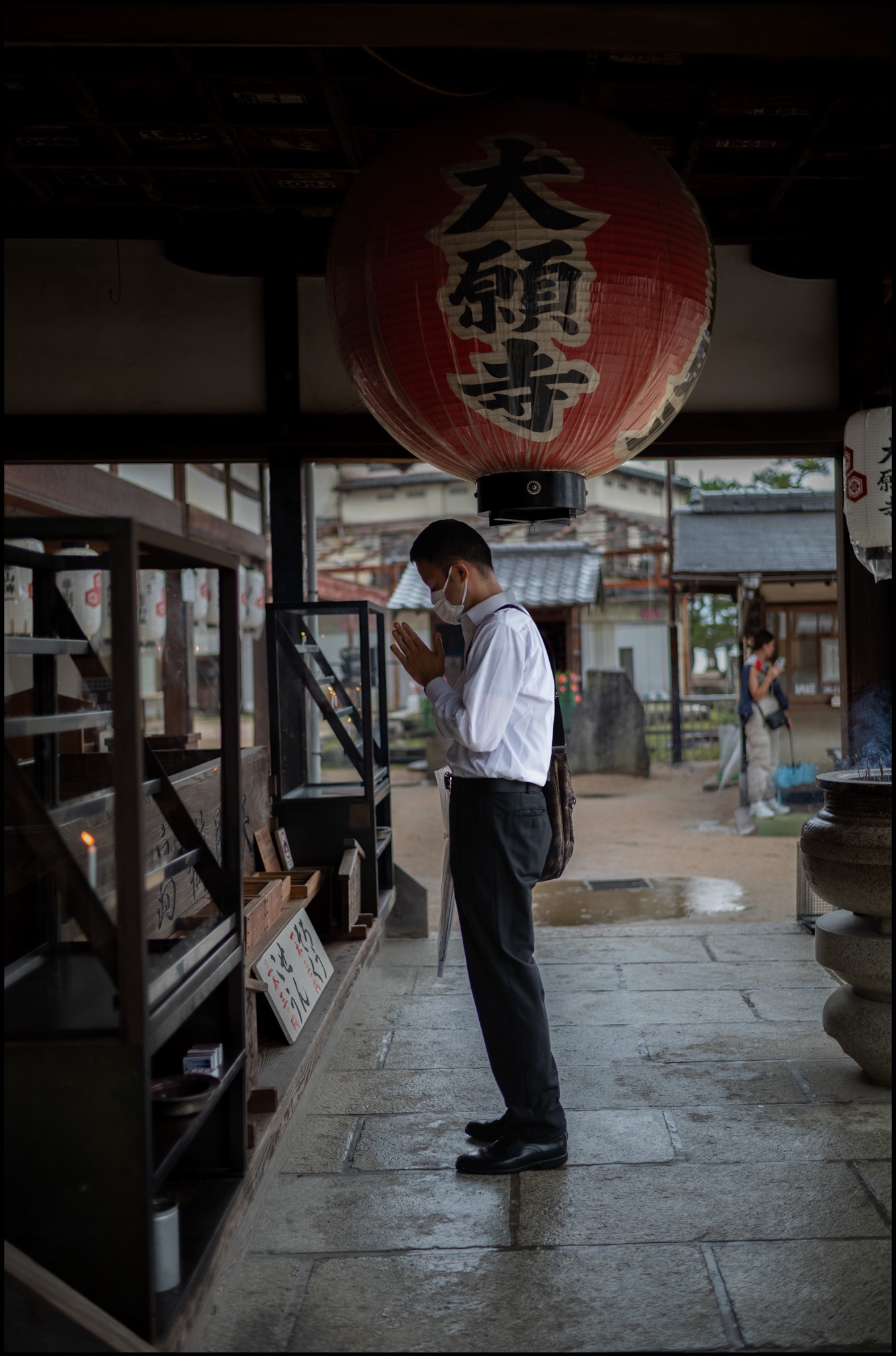
Itsukushima’s design philosophy is rooted in the ancient Shinto belief of venerating nature. The island of Miyajima itself was historically seen as a deity, and thus, to preserve its sanctity, commoners were not permitted to set foot on it. Even today, births and burials are not allowed on the island to maintain its purity.
Against this backdrop, the shrine was meticulously designed to coexist with its surroundings rather than dominate them. Built on stilts over the water, the shrine and its pathways offer a surreal experience, especially during high tide when the waters make it appear as though the entire complex is floating. This clever architectural choice ensured that the shrine didn’t defile the sacred island by digging into the ground.
The “floating” torii gate, arguably the shrine’s most iconic feature, acts as the boundary between the mortal world and the sacred realm of the gods. When the tide rolls in, this grand vermilion gate seems to levitate on the water’s surface, a sight that has inspired countless poems, artworks, and photographs over the centuries. It serves as a reminder of the delicate balance between mankind and nature, a balance that has been at the heart of Shinto beliefs.
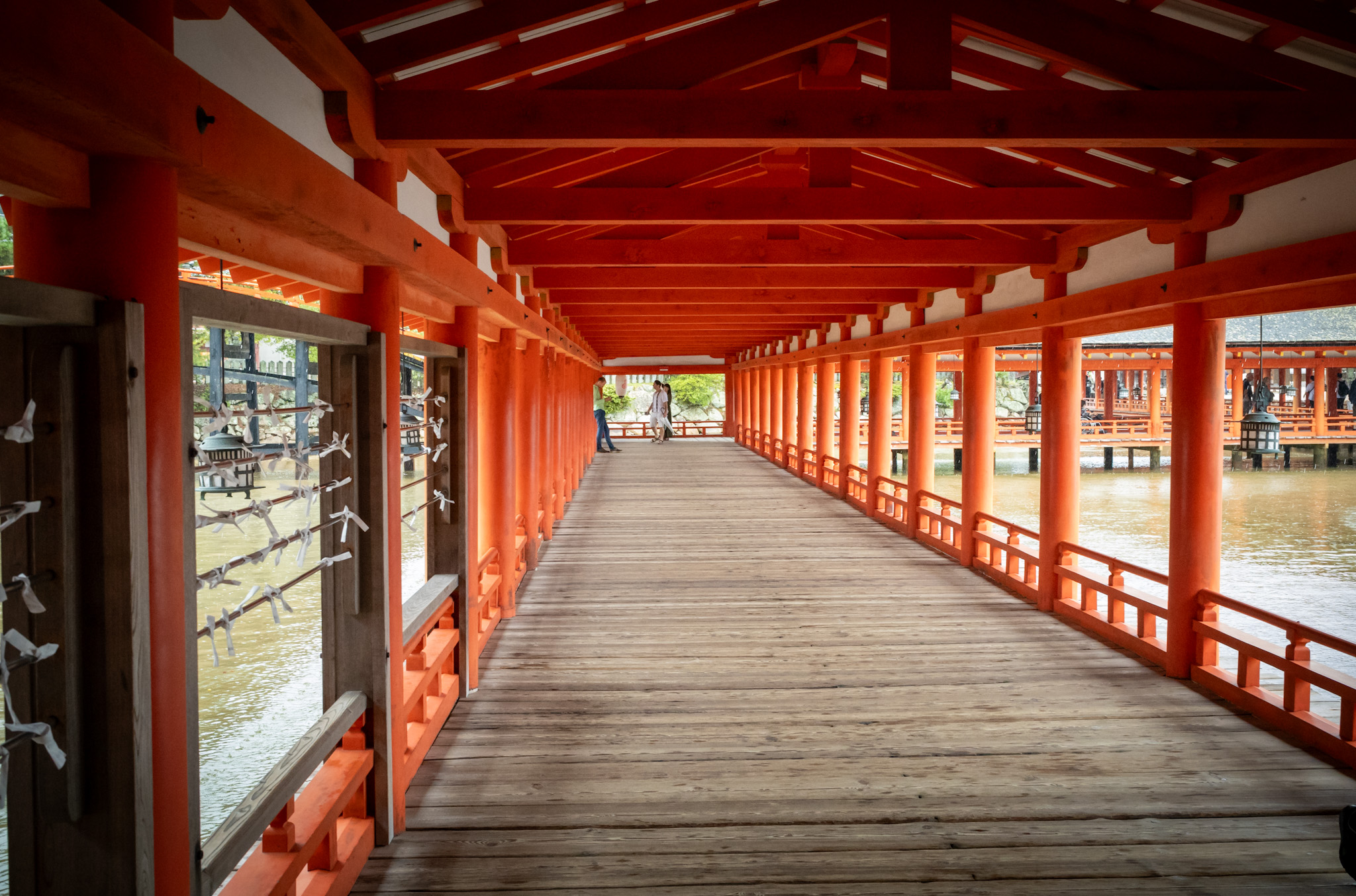
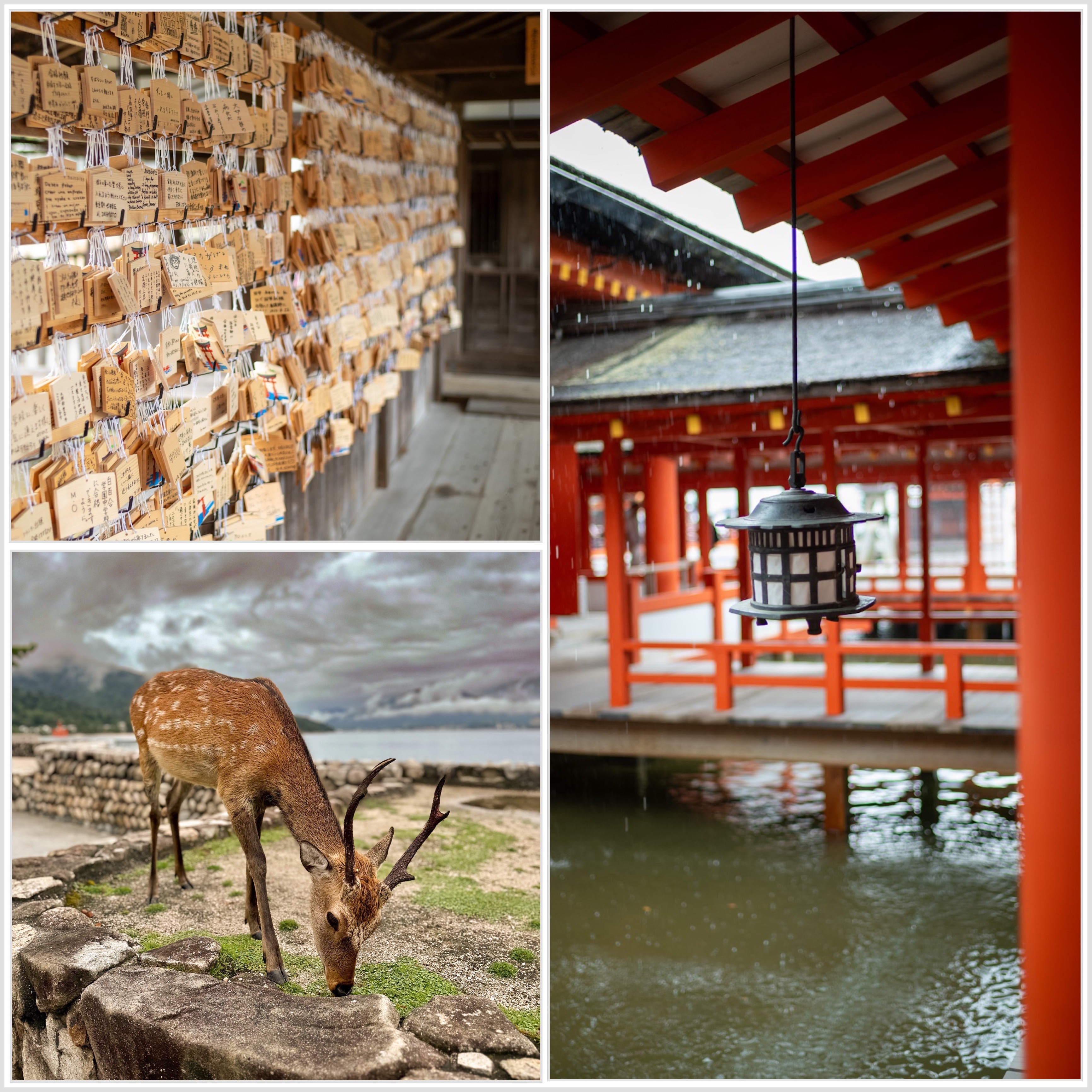
Visitors to Itsukushima Shrine also encounter an array of cultural treasures, from the intricate carvings and Noh theatre stage to the various subsidiary shrines and halls. Every detail reflects the essence of Heian-period architecture and the deep reverence the Japanese hold for their environment and traditions.
A visit to Itsukushima Shrine is a journey through time. As one walks its corridors, there’s a tangible sense of the countless pilgrims, artists, and thinkers who have been moved by its beauty. The gentle sounds of the Seto Inland Sea, the serene ambiance of the halls, and the panoramic vistas of mountains and forests all converge to make Itsukushima Shrine a place where the spiritual and natural worlds intertwine.
In a world constantly racing towards the future, the Itsukushima Shrine stands as a serene reminder of the enduring beauty and wisdom of the past. It beckons us to pause, reflect, and appreciate the timeless dance between humanity, divinity, and nature.

 the-quiet-report.com
Leave a comment